
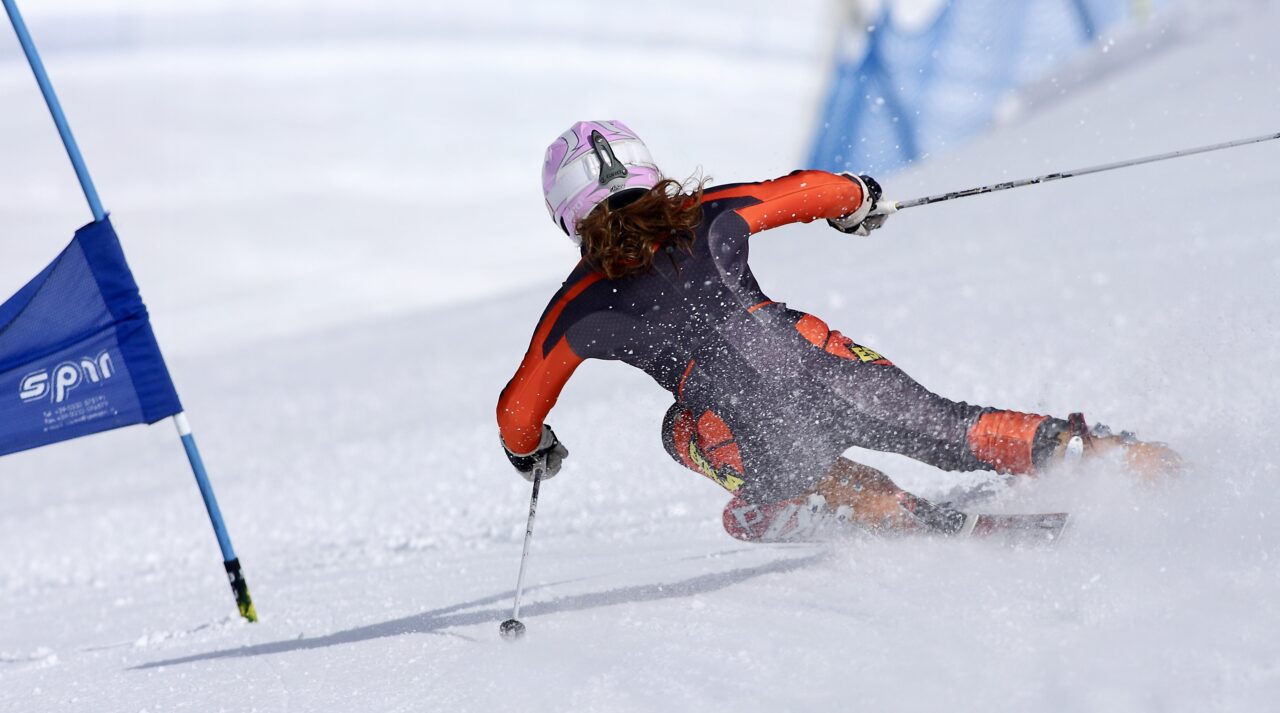
When aspiring ski racers and their families begin to explore the world of competitive equipment, one of the first questions that surfaces is a practical one. The inquiry into the price of specialized skis is not just about a number; it’s the entry point into a much larger conversation about performance, technology, and commitment.
The sticker price on a pair of high-performance race skis reflects years of research, development, and materials science, all engineered for a single purpose: to shave hundredths of a second off a run. Unlike the all-mountain skis you find at a rental shop, these are precision instruments designed to perform under the immense forces generated by an elite athlete on an icy course.
Understanding the investment means looking beyond the price tag and into the very core of what makes a ski fast, stable, and responsive. It’s about recognizing that the equipment is an integral part of a comprehensive performance strategy, working in concert with physical conditioning, mental fortitude, and expert technical coaching.
This guide will walk you through the factors that determine the value of race skis, helping you build a strategic approach to your equipment choices.
Content
Beyond the price tag: Understanding what defines a race ski’s value
The cost of a pair of race skis can seem substantial when compared to recreational models, and for good reason. The difference isn’t just marketing; it’s a fundamental divergence in philosophy, materials, and construction. A recreational ski is designed for versatility, comfort, and forgiveness, allowing a wide range of skiers to have an enjoyable day on the mountain in varied conditions.
A race ski, on the other hand, is an uncompromising tool built for a highly specific task: holding an edge on a hard, icy surface at maximum speed. This specialization requires a level of engineering and material quality that simply isn’t necessary for casual skiing.
Every component, from the wood core to the layers of metal and the composition of the base, is selected and assembled to maximize power transmission, torsional rigidity, and vibration damping.
This ensures that when a racer puts pressure on the ski in a high-stakes turn, the ski responds instantly and predictably, without chattering or losing its grip. The value, therefore, is not just in the object itself, but in the performance potential it unlocks for a dedicated athlete.
The core differences: Race skis vs. recreational skis
The most immediate difference an athlete will feel between a recreational ski and a race ski is stiffness. Race skis are significantly stiffer, both longitudinally (from tip to tail) and torsionally (resistance to twisting).
This rigidity is crucial for transferring every ounce of the skier’s energy directly to the edge of the ski and then into the snow. While a softer, more forgiving recreational ski might absorb a skier’s mistakes, a race ski demands precise input.
It rewards clean, powerful technique with incredible edge hold and explosive energy out of the turn. This is achieved through a more complex and robust internal construction.
Most high-end race skis are built using a “sandwich” construction. This involves layering different materials on top of each other, typically starting with a dense wood core. This core, often made from woods like ash or poplar, provides the ski’s primary strength and lively feel.
It’s then flanked by layers of other materials, most notably sheets of Titanal, a high-strength aluminum alloy. These metal layers are what provide the ski with its dampness—the ability to absorb vibrations at high speed—and its powerful, unyielding edge grip.
In contrast, many recreational skis use a “cap” construction or a composite core, which is lighter and less expensive to manufacture but lacks the raw power and stability of a true race-stock ski.
The base material is also different; race skis use a higher-density, sintered polyethylene base that is more porous, allowing it to absorb more wax. This results in a faster, more durable gliding surface, which is essential for competitive success. The shape, or sidecut, is also highly specialized, engineered to meet specific turn radius requirements for each discipline.
Materials and construction: The science of speed
Diving deeper into the construction of competition skis reveals a world of meticulous engineering. The wood core is the heart of the ski. Manufacturers often use vertically laminated strips of different woods to fine-tune the ski’s flex pattern. Denser woods are placed underfoot for strength and power transmission, while lighter woods might be used in the tip and tail to reduce swing weight and improve turn initiation.
The quality of the wood and the precision of its milling have a direct impact on the ski’s performance and longevity. As mentioned, the Titanal layers are a key differentiator. A typical race ski will have two full sheets of this metal, one above and one below the wood core.
This metal sandwich is what gives the ski its quiet, planted feel on the snow, preventing the tip from flapping or chattering on hard, uneven surfaces. It allows the entire edge of the ski to remain in contact with the snow, providing maximum grip throughout the arc of the turn.
The adhesives and resins used to bond these layers together are also highly advanced. They must be strong enough to withstand thousands of high-force flex cycles without delaminating, and they must cure in a way that doesn’t inhibit the ski’s desired flex characteristics.
The top sheet, while seemingly cosmetic, also serves a purpose, protecting the internal layers from damage and often textured to shed snow and reduce weight. Finally, the edges themselves are made from a harder, more durable steel than those on recreational skis.
This allows them to be sharpened to more acute angles and to hold that sharpness longer, which is critical when racing on injected, boilerplate courses. Every single element is optimized for speed and control, and this level of material science and manufacturing precision is a primary driver of the overall investment required.
FIS regulations and their impact on design and price
The International Ski Federation (FIS) sets the rules that govern international ski racing, and these rules have a profound influence on ski design and, consequently, their cost. For each discipline—Slalom (SL), Giant Slalom (GS), Super-G (SG), and Downhill (DH)—FIS dictates specific parameters for equipment, including minimum ski length and minimum sidecut radius.
These regulations are in place primarily for safety, designed to control the speeds that athletes can reach. For manufacturers, this means they cannot simply produce one “fast” ski. They must engineer, test, and produce distinct models for each discipline that comply with these strict rules.
For example, a FIS-legal men’s GS ski must have a sidecut radius greater than 30 meters, while a slalom ski will have a much shorter radius, around 13 meters. This requires completely different molds, core profiles, and material layups. The research and development costs associated with creating compliant, competitive skis for each category are immense.
Manufacturers work closely with their World Cup athletes to test dozens of prototypes each season, tweaking the construction to find the perfect balance of characteristics for a given discipline. This constant cycle of innovation, driven by both the quest for speed and the need to adhere to FIS regulations, means that the skis available to the public are direct descendants of this elite-level development process.
The cost reflects not only the materials in the ski you buy but also the thousands of hours of research, prototyping, and on-snow testing that went into its creation. This ensures that even a junior racer has access to technology that was winning World Cups just a few seasons prior.
Building your quiver: A strategic approach to ski selection
For a competitive ski racer, owning a single pair of skis is rarely an option. Different disciplines demand fundamentally different equipment. A slalom ski is designed for quick, agile, and tight turns, while a downhill ski is built for pure, unadulterated speed and stability over long, sweeping arcs.
The collection of skis an athlete owns is known as their “quiver,” and building it strategically is a key component of long-term development and success. The process is not about simply buying the most expensive skis; it’s about matching the right tool to the right job at the right stage of an athlete’s career. A young, developing racer has very different needs from a seasoned FIS athlete competing in all four events.
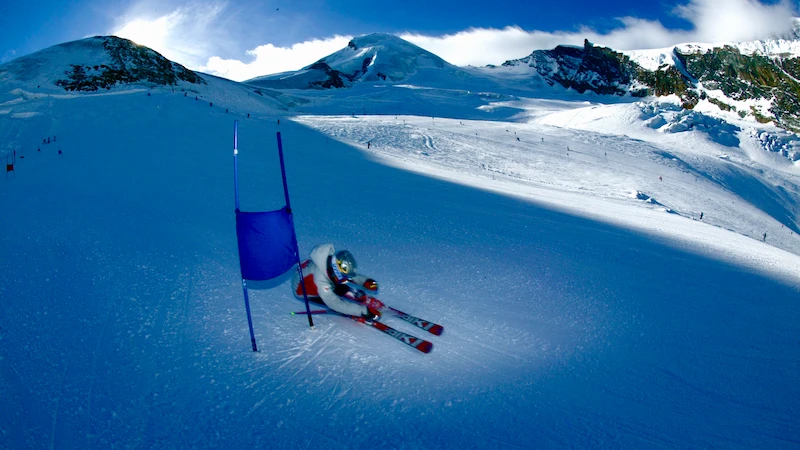
A well-planned quiver evolves with the athlete, growing in specialization and size as their skills, goals, and commitment level increase. This thoughtful approach ensures that the athlete is always on equipment that supports their technical development rather than hindering it. It also represents a significant financial plan that needs to be considered as part of the overall cost of participating in the sport.
The essential disciplines: SL, GS, SG, and DH skis explained
Understanding the unique characteristics of each type of race ski is the first step in building a proper quiver. The four primary disciplines in alpine racing each have their own specialized ski, designed to excel at the specific demands of that event. The collection of SL, GS, SG, and DH skis forms the complete toolkit for a versatile speed and tech athlete.
Here is a breakdown of the four main types:
- Slalom (SL) Skis: These are the shortest and quickest skis in the quiver. They feature a deep sidecut and a very short turn radius (typically 12-13 meters for men’s FIS models). This aggressive shape allows the skier to make rapid, tight turns around the closely set gates of a slalom course. They are designed to be incredibly agile and provide explosive rebound, helping to propel the skier from one turn into the next.
- Giant Slalom (GS) Skis: Longer and more stable than SL skis, GS skis are built for the longer, more flowing turns of a giant slalom course. They have a much larger turn radius (e.g., >30 meters for FIS men) as mandated by regulations. This design encourages the skier to make clean, carved arcs and requires more strength and skill to bend the ski properly. They offer a balance of agility and stability at higher speeds.
- Super-G (SG) Skis: This is where we enter the realm of speed events. Super-G skis are longer and straighter still than GS skis, designed for even higher speeds and much larger turns. They are built with a focus on stability and vibration absorption, allowing the athlete to maintain control while navigating terrain features like rollers and compressions at speeds that can exceed 60 mph (100 km/h).
- Downhill (DH) Skis: The longest, heaviest, and most stable skis of all. Downhill skis are built for one thing: raw speed. With a very long turn radius and a construction focused almost entirely on dampness and stability, they are designed to glide efficiently and hold a line at speeds that can top 90 mph (145 km/h). They are the least forgiving and require immense skill and strength to manage.
For most racers, the journey begins with the technical events, SL and GS, before progressing to the speed events of SG and DH as they get older and more experienced.
From beginner to elite: How your quiver evolves
The composition of an athlete’s quiver is a direct reflection of their age, ability, and competitive focus. A young U12 racer just starting out might begin with a single pair of “multi-event” or “combi” skis that can handle both slalom and giant slalom training.
As they become more serious, typically around the U14 level, they will transition to having dedicated pairs for each discipline. This is a critical step, as the specific skis allow them to develop the distinct techniques required for SL and GS. At this stage, a well-rounded skier will typically own at least one pair of SL skis and one pair of GS skis.
As the athlete progresses to the U16 and FIS levels, the demands on their equipment increase dramatically. Training volume goes up, and the forces exerted on the skis become much greater. It’s at this point that the concept of having multiple pairs for a single discipline becomes not a luxury, but a necessity. A serious racer will often have two pairs of SL and GS skis.
One pair is designated for training, absorbing the daily wear and tear of countless gate impacts and repetitive drills. The other pair is reserved exclusively for race days. These “race skis” are kept in pristine condition, with a perfectly structured and waxed base and razor-sharp edges, ensuring the athlete has the absolute best equipment under their feet when it matters most.
This separation also provides a crucial backup in case of damage to the primary pair. For top-level FIS and collegiate racers, it’s not uncommon for their quiver to expand even further. An elite athlete might have four pairs of each discipline ski, with different pairs prepared for specific snow conditions—one for hard, icy man-made snow, another for softer, natural winter snow, and so on. This level of specialization represents the pinnacle of equipment strategy.
The “two pairs” philosophy: Training vs. race day skis
The strategy of maintaining separate training and race skis is one of the most significant steps an athlete can take to professionalize their approach. The rationale is multifaceted, touching on performance, longevity, and psychology. Training skis are the workhorses. They endure hundreds of runs, countless impacts with gates, and the inevitable scrapes and dings that come from pushing limits in a training environment.
Their edges are sharpened frequently, and their bases are subjected to constant friction. This daily grind inevitably degrades the ski’s performance characteristics over time. The base loses its structure, the edges lose their material, and the core of the ski can lose some of its “pop” or liveliness.
By reserving a separate pair for racing, an athlete ensures they are competing on a ski that is in perfect, factory-fresh condition. The base of a race ski is meticulously prepared with a specific structure ground into it for the day’s conditions and then saturated with the appropriate temperature-specific wax. The edges are tuned to precise, aggressive angles and are perfectly sharp.
This optimization can make a tangible difference in performance, providing better glide on the flats and more secure grip on the ice. Furthermore, there’s a significant psychological benefit. Stepping into the start gate knowing you have the best possible equipment under your feet builds confidence. It removes a variable from the complex equation of a race run, allowing the athlete to focus solely on their performance.
This two-pair system, while representing a larger initial investment, ultimately protects the more expensive race skis, extends the life of the overall quiver, and provides a competitive edge that is essential at higher levels of the sport.
The hidden costs: What your initial ski purchase doesn’t cover
The question “how much do skis cost” often overlooks a critical reality: the skis themselves are just one piece of a much larger equipment puzzle. A high-performance race ski is effectively useless without a system of equally high-performance components working in harmony with it.
The bindings that mount to the ski, the boots that connect the athlete to the bindings, and the ongoing maintenance required to keep everything in peak condition are all essential expenses that must be factored into the budget. These “hidden costs” are not optional add-ons; they are non-negotiable elements of a competitive ski racing setup.
In fact, many coaches would argue that the boots and the quality of the ski tune are even more important than the specific model of ski an athlete is using. A holistic view of equipment costs is necessary for families to plan effectively and to ensure that their investment in skis is not undermined by compromising on the components that bring them to life.
Bindings and plates: The critical connection
Race skis are almost always sold “flat,” meaning they do not come with bindings. This is because the choice of binding and its mounting position is a highly personal and critical decision. Race bindings are engineered to be more robust than their recreational counterparts.
They feature higher DIN (Deutsches Institut für Normung) settings, which is the release value. Racers generate immense forces and need their bindings to hold them securely to the ski during high-G turns, but still release reliably during a fall to prevent injury. These bindings are built with more metal components for durability and provide a more direct and powerful connection between the boot and the ski.
Equally important is the plate that sits between the binding and the ski. Most race skis come with a pre-installed race plate from the manufacturer. These plates serve several functions. They lift the boot higher off the snow, providing more leverage and allowing the skier to achieve higher edge angles before “booting out” (where the boot hits the snow and causes the ski to lose its grip).
They also act as a dampening system, absorbing vibrations and allowing the ski to flex more naturally under the boot. The synergy between the ski, the plate, and the binding is a finely tuned system.
Choosing the right binding and ensuring it is mounted correctly by a certified technician is a crucial expense that directly impacts both safety and performance.
Boots: The true driver of your skiing
While skis get much of the glory, most elite coaches and athletes will tell you that ski boots are the single most important piece of equipment a racer owns. The boot is the interface between the athlete and the ski; it’s where every movement, every intention, and every ounce of energy is transferred to the equipment. A ski can only do what the boot tells it to do.
If the boot does not fit properly, the best skis in the world will feel unresponsive and difficult to control. Race boots are characterized by a very snug, precise fit and a stiff flex. The stiffness, indicated by a flex number (e.g., 110, 130, 150), determines how much resistance the boot provides when the skier presses forward. A stronger, heavier, or more aggressive skier will require a stiffer boot to handle the forces they generate.
However, the out-of-the-box fit is just the beginning. The real investment in boots comes from the customization process. This is a critical and often overlooked expense. A professional bootfitter will start by creating a custom footbed, which supports the arch and aligns the foot properly within the boot shell.
They will then often heat-mold the liner to the skier’s foot and may need to “punch” or “grind” the plastic shell to accommodate the unique shape of the athlete’s foot, ankle, and lower leg. They will also adjust the boot’s alignment, known as canting, to ensure the skier can stand flat on their skis.
This meticulous process can take several hours and is an additional cost on top of the boots themselves, but it is absolutely essential for performance, comfort, and injury prevention. A poorly fitting boot can not only hinder performance but also lead to chronic pain and long-term foot problems.
Tuning and maintenance: The ongoing investment in performance
The investment in ski racing equipment doesn’t end after the initial purchase. To perform at their best, race skis require constant and meticulous maintenance. This ongoing tuning is a significant commitment of either time or money.
The two primary components of a ski tune are the base and the edges. The base needs to be kept clean and waxed regularly with the correct temperature-specific wax to ensure optimal glide. Before a big race, this process can involve multiple layers of different waxes, a process that can take hours.
The edges require even more attention. For every training session and race, the edges must be sharpened to be perfectly smooth and angled precisely. A typical race tune involves setting both a base bevel and a side-edge angle.
These angles are measured in degrees and are specific to the discipline and the skier’s preference. For example, a slalom ski might have a more aggressive side-edge angle for maximum grip on ice. This requires a set of specialized tools, including files, guides, diamond stones, and deburring tools. An athlete can learn to do this themselves, which requires an initial investment in a quality tuning kit and a significant time commitment.
Alternatively, they can pay a professional ski technician to tune their skis regularly. For a serious racer training several days a week, this can mean tuning skis almost every night. The cost of waxes, tools, or professional tuning services adds up over a season and is an essential, non-negotiable part of the budget for any competitive ski racer. Without a proper tune, even the most expensive skis will not perform as designed.
Maximizing your investment: The role of expert coaching and fitting
Purchasing elite-level equipment is only the first step. To truly unlock the potential of that equipment and maximize the significant financial investment it represents, athletes need expert guidance. The world of race ski technology is complex and nuanced, and the ideal setup for one athlete may be completely wrong for another.
This is where the value of experienced coaches, professional bootfitters, and knowledgeable ski technicians becomes immeasurable. They provide the crucial link between the athlete, their technique, and their equipment. This expert ecosystem helps ensure that the athlete is not only on the right gear but also knows how to use it effectively.
Making decisions about skis, boots, and bindings in a vacuum can lead to costly mistakes, frustration, and a plateau in performance. Engaging with professionals transforms an equipment purchase from a simple transaction into a strategic component of an athlete’s overall development plan.
Why professional ski fitting is non-negotiable
As emphasized earlier, the connection between the athlete’s foot and the ski is paramount. A professional bootfitter does far more than just sell a pair of boots; they analyze an athlete’s biomechanics. They assess foot shape, ankle flexibility, leg alignment, and stance.
This detailed analysis allows them to select the right boot model and then customize it to create a perfect, one-to-one connection. This process, known as professional ski fitting, is non-negotiable for any serious racer.
A proper fit ensures that every subtle movement of the ankle and leg is transferred directly and efficiently to the ski’s edge. This results in quicker turn initiation, better edge control, and a more balanced stance.
Conversely, an improper fit can lead to a host of problems. If a boot is too big, the foot will slop around inside, leading to a delayed and sloppy response from the ski. If it’s too small or improperly shaped, it can cause painful pressure points, cut off circulation, and even lead to long-term foot issues.
Furthermore, a bootfitter’s work on alignment and canting can correct biomechanical inefficiencies that the athlete may not even be aware of. This can unlock a new level of performance, allowing the skier to engage the edge of the ski more cleanly and powerfully.
Investing in a multi-hour session with a reputable bootfitter is one of the highest-return investments a ski racer can make. It ensures that the foundation of their skiing—their connection to the snow—is solid and optimized.
How coaching impacts your equipment needs
An experienced coach provides an invaluable perspective on an athlete’s equipment needs. A coach watches an athlete ski for hours upon hours, developing an intimate understanding of their technique, their strengths, and their areas for improvement. They are often the first to notice when equipment might be holding a skier back.
For example, a coach might observe that a young athlete is struggling to bend their GS skis and complete a clean carved turn. This could be a technical issue, but it could also be a sign that the skis are too long or too stiff for the athlete’s current weight and strength. Without this expert eye, a family might assume the athlete just needs to “try harder,” leading to frustration.
Coaches can provide objective feedback and recommendations based on these on-snow observations. They can help guide decisions about when it’s time to move up in ski length, when to switch to a stiffer boot, or how to set up skis for a particular type of course.
At a high-performance training center like Ski Zenit, our coaches work hand-in-hand with athletes to create a seamless link between technical development and equipment setup.
This integrated approach ensures that as an athlete’s skills evolve, their equipment evolves with them. This synergy is crucial for consistent progress. A coach can also help identify if a perceived equipment problem is actually a technical flaw, saving families from making unnecessary and expensive equipment changes.
Long-term strategy: Planning your equipment budget across seasons
Competitive ski racing is a long-term commitment, and the equipment budget should be viewed in the same way. It’s not about a single, massive outlay but rather a strategic, multi-year plan. Skis need to be replaced, boots wear out, and as an athlete grows and gets stronger, their needs will change. A smart long-term strategy involves anticipating these changes and budgeting for them accordingly.
Typically, a serious racer will need new race skis every one to two seasons. While the cores can last longer, the bases and edges wear down from frequent tuning, and technology continually advances. Boots also have a lifespan; the plastic can soften and break down over time, losing its responsiveness.
Planning ahead allows families to take advantage of off-season deals and to make informed, unhurried decisions rather than panic-buying equipment mid-season. It also involves budgeting for the ongoing costs of maintenance, including wax, tools, and professional tuning services. A long-term plan should also consider the athlete’s progression.
A family with a U14 athlete should already be thinking about the future need for speed skis (SG) as they approach the U16 and FIS levels. By viewing equipment as a continuous investment in the athlete’s career, families can manage the costs more effectively and ensure the racer always has the appropriate tools to succeed.
This forward-thinking approach, often guided by the advice of a trusted coach or program, is the hallmark of a professional and sustainable approach to the sport.