
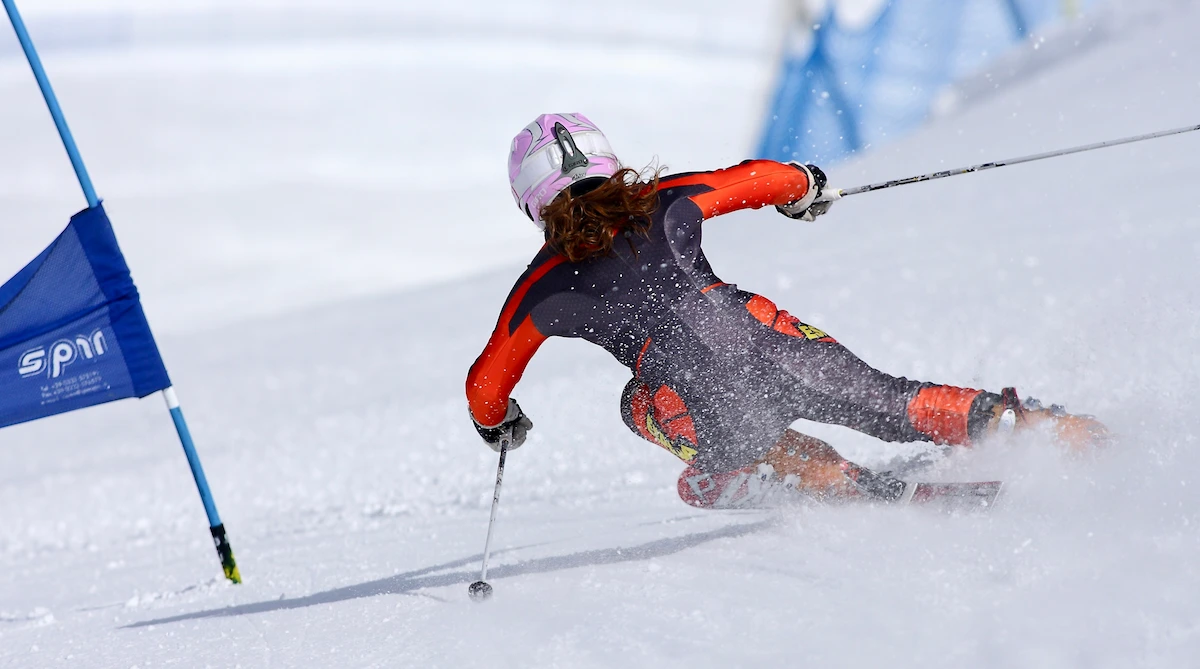
Ski racing is a sport that demands everything from the human body. When you are hurtling down a mountain at high speeds, your muscles, joints, and nervous system are working in perfect synchronization to handle immense centrifugal forces and uneven terrain.
The physical toll is significant, and staying healthy throughout a long season requires more than just luck. It requires a dedicated approach to physical preparation that starts long before the first snowflake hits the ground.
Many athletes focus solely on getting faster, but the fastest racers are often the ones who can stay on the snow consistently without being sidelined by avoidable physical setbacks.
The nature of competitive skiing involves high-impact movements, rapid changes in direction, and extreme knee angulation. These factors put specific parts of the body, particularly the lower limbs and the core, under constant pressure.
To handle this, a well-rounded training program needs to address strength, flexibility, and the ability of the body to sense its position in space. By focusing on these areas, you can build a body that is not only powerful but also resilient. This resilience is what allows you to push your limits during a race, knowing that your joints and ligaments are prepared for the stress.
In the following sections, we will look at the specific types of movements and routines that help protect the body from common injuries. We will look at how to build stability around the knees, how to use the core to protect the spine, and how to train the brain to react faster to changes underfoot.
This approach to training is what separates the elite from the rest. It is about being proactive rather than reactive. Instead of waiting for a small ache to become a major problem, you can use these tools to maintain a high level of performance all year round.
As we go through these details, keep in mind that consistency is your best friend. Doing these exercises once in a while will not provide the protection you need. However, making them a regular part of your routine will create a foundation of safety that supports your technical growth on the hill.
Whether you are training on the glaciers of Switzerland or preparing for a winter in South America, the principles of physical readiness remain the same. Let’s look at how you can start building that foundation today.
Content
Lower body stability and ligament health
The knees are perhaps the most vulnerable part of a ski racer’s body. The combination of high-speed turns and the leverage provided by long skis creates a high-risk environment for ligaments like the ACL and MCL. To mitigate this risk, ligament strengthening exercises are a vital part of any dryland program.
While you cannot “strengthen” a ligament in the same way you do a muscle, you can strengthen the muscles surrounding the joint to provide better support and reduce the load on the connective tissue. This involves a mix of heavy lifting and controlled, slow movements that emphasize the eccentric phase of an exercise.
One of the most effective ways to protect the knee is to focus on the hamstrings and the glutes. In many skiers, the quadriceps are disproportionately strong compared to the hamstrings.
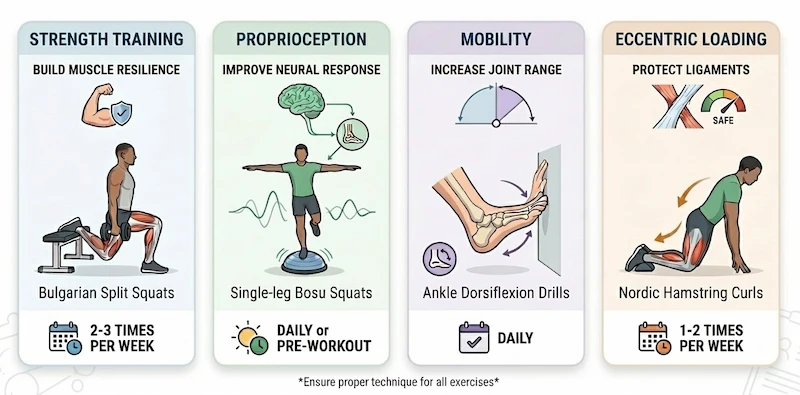
This imbalance can pull the tibia forward, putting extra stress on the ACL. To balance this out, exercises like Nordic hamstring curls or Romanian deadlifts are excellent.
These movements teach the hamstrings to act as a brake, helping to stabilize the knee joint during the high-pressure phases of a turn. When your hamstrings are strong and responsive, they act as a safety net for your ligaments.
Single-leg exercises are also a staple for any serious racer. Skiing is essentially a series of high-intensity efforts on one leg at a time. By incorporating Bulgarian split squats or single-leg presses into your routine, you can identify and correct imbalances between your left and right sides.
This is important because most injuries happen when one side of the body is weaker or less stable than the other. Working on each leg individually ensures that both sides can handle the forces of a tight slalom gate or a high-speed Super-G turn. You might notice that one leg feels more stable than the other; this is precisely why we do these drills—to bring both sides up to an elite level.
Another key aspect of lower body safety is ankle mobility. If your ankles are stiff, the force from the snow has to go somewhere else, and usually, that “somewhere else” is your knee.
By working on dorsiflexion through various stretches and mobilizations, you allow your boots and your body to work together more effectively. This allows for a better forward position over the skis, which is safer and faster. When you have mobile ankles and strong, balanced legs, you are much better equipped to handle the unexpected bumps and ruts that are common in race courses.
Proprioception drills skiing and balance training
Having strong muscles is only half the battle. Your brain also needs to know exactly where your body is and how to react to sudden changes. This is where proprioception drills skiing come into play.
Proprioception is your body’s ability to sense movement, action, and location. In the context of ski racing, it is what allows you to stay balanced when a ski hits a patch of ice or a hidden rut. Training this system involves putting yourself in slightly unstable positions and teaching your nervous system to find stability quickly.
A simple but effective way to start is by using a balance board or a Bosu ball. Performing basic movements like squats or even just standing on one leg on an unstable surface forces the small stabilizer muscles in your ankles, knees, and hips to fire constantly.
As you get better at this, you can add complexity, such as catching a ball or performing torso rotations while maintaining your balance. These drills mimic the chaotic environment of a race course, where you are constantly adjusting your center of mass to stay over your outside ski. The goal is to make these adjustments automatic, so you don’t have to think about them when you are in the gates.
Slacklining is another favorite among professional skiers for building incredible balance and core-to-extremity coordination. Walking a thin, moving line requires total focus and micro-adjustments from the entire body. It builds a level of functional stability that is challenging to replicate with traditional gym equipment.
When you spend time on a slackline, you are teaching your nervous system to be calm and reactive under pressure. This translates directly to the hill, where a calm and reactive body is much less likely to “panic” and end up in a position that leads to injury.
We can also look at more specific drills that involve closing your eyes or using strobe glasses to limit visual input. This forces the body to rely entirely on the sensations coming from the feet and the inner ear.
Since visibility is often poor during races—due to flat light or falling snow—having a highly developed sense of proprioception is a massive advantage. It allows you to “feel” the terrain through your boots even when you can’t see it clearly. By challenging your balance in the gym, you make the challenges on the mountain feel much more manageable and safe.
Core strength and spinal protection
While the legs do the heavy lifting in skiing, the core is the bridge that connects your upper and lower body. A weak core leads to a “broken” position, where the upper body collapses forward or rotates excessively.
This makes you slower and puts your lower back at risk. In ski racing, the spine is subjected to significant compression and rotation. To protect it, you need a core that is capable of resisting unwanted movement, a concept known as anti-rotation and anti-extension. This is a fundamental part of ski racing injury prevention exercises.
Instead of traditional crunches, which focus on flexing the spine, skiers should focus on exercises like planks, dead bugs, and Pallof presses. The Pallof press is particularly useful because it teaches you to resist a lateral force that is trying to pull you out of alignment.
This is precisely what happens in a high-speed turn; the centrifugal force wants to pull your torso away from the center of the turn. If your core is strong enough to resist that pull, you stay in a powerful, stacked position that protects your vertebrae and allows your legs to work more efficiently. A stable core is the secret to maintaining a clean line through a rough course.
The deep core muscles, such as the transverse abdominis and the multifidus, play a key role in stabilizing the individual segments of the spine. You can train these muscles through controlled breathing exercises and movements that require a “hollow body” position.
When these deep muscles are active, they create a natural weight belt that supports your back from the inside out. This is especially important during the landing of jumps or when hitting a compression at the bottom of a steep pitch. By building this internal support system, you significantly reduce the risk of disc injuries and chronic lower back pain.
As you progress, you can integrate core work with lower body movements. For example, doing a lunge with an overhead medicine ball hold requires the core to work incredibly hard to keep the body upright.
This type of integrated training is more functional for skiing because the body never works in isolation on the mountain. Everything is connected. When your core is integrated with your hip and shoulder stability, you become a much more solid and robust athlete. You will find that you can handle more aggressive turn shapes and higher speeds without feeling like your technique is falling apart under the pressure.
Ski safety training and environmental awareness
Preparation goes beyond just what you do in the gym. It also involves understanding the environment and how to manage the risks associated with the sport. This is the essence of ski safety training.
One of the most important aspects of staying safe is knowing how to fall. While we always aim to stay on our feet, crashes are a part of racing. Learning how to relax the body and slide out of a fall, rather than tensing up and fighting it, can often be the difference between a few bruises and a major injury. Professional camps often include “tumble” training or gymnastics to help athletes become more comfortable with losing their orientation and landing safely.
Another major factor in safety is equipment maintenance. Your bindings are your primary safety device. If they are set too high, they won’t release when they should; if they are too low, they might pre-release at high speeds, which is equally dangerous.
Regularly checking your DIN settings and ensuring your boots are in good condition is a simple but vital part of your safety routine. Additionally, the sharpness of your edges and the flat of your bases can affect how the ski interacts with the snow. A ski that hooks up unexpectedly can catch you off guard and lead to a knee injury. Taking care of your gear is as important as taking care of your body.
Fatigue management is also a key component of safety. Most injuries occur at the end of a training session or at the end of a long training block when the body is tired and the mind is less sharp. Learning to listen to your body and knowing when to take a break is a skill that every elite athlete must master.
If your legs are shaking and your focus is drifting, that last “hero run” is often where things go wrong. A good coach will help you monitor your volume and intensity, ensuring that you are always training in a state where you can maintain good form and react quickly to the terrain. Rest is not a sign of weakness; it is a strategic tool for long-term success.
Finally, we must consider the role of warm-ups. A proper warm-up on the hill is not just about a few easy runs. It should include dynamic movements that wake up the nervous system and prepare the joints for the specific stresses of racing.
This might include leg swings, torso rotations, and short bursts of high-intensity skiing. By getting the blood flowing and the “engines” firing before you enter the start gate, you ensure that your body is ready for the very first turn. A cold body is a brittle body; a warm body is a flexible and resilient one. Taking those fifteen minutes to warm up properly is one of the easiest ways to prevent muscle strains and joint issues.
Advanced recovery techniques for racers
If you are training hard, you are essentially breaking your body down so it can grow back stronger. However, that “growing back” part only happens during recovery. Without adequate recovery, the stress of training accumulates, leading to overuse injuries like tendonitis or stress fractures.
Modern ski racers use various tools to accelerate this process. Foam rolling and self-myofascial release are great for maintaining tissue quality and reducing muscle soreness. By spending a few minutes each day on a foam roller, you can help keep your muscles supple and prevent the development of “knots” that can limit your range of motion.
Nutrition and hydration also play a massive role in injury prevention. Your muscles and connective tissues need specific nutrients to repair themselves. Protein is essential for muscle repair, while fats and carbohydrates provide the energy needed for high-intensity training. Furthermore, staying hydrated is vital for maintaining the elasticity of your tissues. Dehydrated muscles and ligaments are more prone to tears. When you are training at high altitudes or in cold weather, you might not feel as thirsty, but your body is still losing fluids. Staying on top of your nutrition and hydration is a simple way to support your physical preparation.
Sleep is perhaps the most powerful recovery tool available. It is during deep sleep that the body releases growth hormone and performs the bulk of its repair work. For a competitive athlete, getting 8 to 9 hours of quality sleep is not a luxury; it is a requirement.
Lack of sleep not only slows down physical recovery but also impairs cognitive function and reaction time. On the race course, a split-second delay in reaction can be the difference between a clean gate and a crash. Prioritizing your sleep schedule is a sign of a professional mindset and a commitment to your long-term health.
We can also look at more specialized recovery methods like contrast baths or compression garments. Contrast baths involve alternating between hot and cold water to stimulate blood flow and reduce inflammation.
Compression boots or socks can help move metabolic waste out of the legs after a heavy day of training. While these tools are not a substitute for the basics like sleep and nutrition, they can provide that extra 1% that helps you feel fresh for the next day of training. When you stack these small advantages together, you create a body that is much more resistant to the wear and tear of a competitive season.
The role of flexibility and joint mobility
Flexibility is often overlooked in favor of strength, but for a ski racer, it is a key component of safety. Being flexible doesn’t mean you need to be a gymnast, but you do need enough range of motion to handle the extreme positions that skiing demands. If your hips are tight, your body will compensate by moving through the lower back or the knees, neither of which is designed for that kind of mobility.
By working on hip mobility through exercises like the “pigeon stretch” or “90/90 hip switches,” you allow your legs to move independently of your torso, which is essential for good technique and injury prevention.
Dynamic flexibility is especially important. This refers to your ability to move through a full range of motion while under control. In a race, you are often pushed into deep flexed positions or wide stances.
If your muscles aren’t prepared for those “end-range” positions, they are more likely to strain or tear. Incorporating dynamic stretching into your daily routine helps keep your muscles long and responsive.
This isn’t just about being “loose”; it’s about being able to produce force even when your joints are in extreme positions. This “functional range” is what allows elite racers to recover from a mistake that would cause a less flexible athlete to crash.
Upper body mobility should not be ignored either. While the legs do the skiing, the shoulders and thoracic spine need to be mobile enough to allow for proper pole plants and a stable upper body.
A stiff upper back can lead to a rounded posture, which makes it harder to stay balanced over the skis. Simple movements like cat-cow stretches or thoracic rotations can help maintain a healthy spine.
When your whole body is mobile and works as a single unit, the forces of skiing are distributed more evenly, reducing the stress on any one specific joint. This holistic approach to mobility is a cornerstone of a healthy career.
It is also helpful to think about the timing of your flexibility work. Static stretching—where you hold a position for a long time—is best done after training or in the evening when your muscles are warm and you want to relax.
Doing long static stretches right before you ski can actually temporarily reduce your muscles’ power output. Before skiing, stick to dynamic movements that prepare the body for action.
By understanding how to use different types of stretching at the right times, you can maximize both your performance and your safety. This balanced approach ensures that you are both strong and supple, a winning combination on any race hill.
Integrating mental focus with physical safety
The mind is the commander of the body, and its state directly affects your safety on the mountain. When you are stressed, anxious, or distracted, your muscles tend to tense up.
This tension makes you less fluid and more prone to injury. Learning how to maintain a “relaxed focus” is a skill that can be trained just like your quadriceps. Visualization is a powerful tool for this.
By mentally rehearsing your runs and seeing yourself handling difficult sections with ease, you prime your nervous system to stay calm in the actual moment. A calm mind leads to a calm body, and a calm body is much better at absorbing shocks and making quick adjustments.
Awareness of your surroundings is another mental aspect of safety. This includes understanding the snow conditions, the visibility, and the layout of the course. On a day with flat light, for example, a smart racer knows to rely more on their “feel” and perhaps dial back the aggression slightly to stay safe.
Knowing where the “danger zones” are on a course—like a sharp turn after a blind knoll—allows you to prepare your body for the extra force you are about to encounter. This proactive mental approach is a form of safety training that doesn’t require any gym equipment but is incredibly effective.
We should also talk about the importance of confidence. When you trust your training and your equipment, you ski with a certain flow that is inherently safer. Hesitation is often where accidents happen.
If you are “in between” two minds about a turn, your body won’t be fully committed, and your technique will suffer. Building confidence comes from doing the work in the off-season.
When you know you have done your ligament strengthening exercises and your proprioception drills skiing, you have a mental “bank account” of safety to draw from. You know your body can handle the pressure, which allows you to ski with the commitment needed to be fast and safe.
Finally, communication with your coaches and teammates is part of the mental game. Sharing information about how the course is running or how your body is feeling creates a safer environment for everyone.
If a certain gate is becoming particularly rutted, knowing that information before you drop in allows you to adjust your line and your physical tension accordingly. Skiing is an individual sport, but safety is a team effort.
By staying mentally sharp and communicative, you add another layer of protection to your physical preparation. This mental-physical connection is what allows athletes to perform at their peak year after year.
The impact of periodization on injury prevention
You cannot train at 100% intensity all year round. If you try, your body will eventually break. This is why periodization—the systematic planning of athletic training—is so important for injury prevention.
A typical year for a ski racer is divided into different phases: the off-season, the pre-season, the competition season, and the transition phase. Each phase has a different focus. In the off-season, the goal is to build a massive base of strength and aerobic fitness.
This is when you do the heavy lifting and the high-volume work that prepares your tissues for the months ahead. This foundation is what carries you through the winter.
As you move into the preseason, the training becomes more specific. You start to incorporate more explosive movements and more proprioception drills skiing that mimic the demands of the hill. The goal here is to translate your general strength into “skiing power.”
This is also a critical time for ski safety training, as you start to get back on the snow and need to re-acclimatize to the forces of racing. During the competition season, the focus shifts to maintenance and recovery.
You want to keep the strength you built in the summer, but you also need to stay fresh for the races. The volume of gym work goes down, but the quality stays high.
The transition phase, which happens right after the season ends, is often the most overlooked part of the year. This is a time for active recovery. It’s a chance to let your joints heal and your mind refresh.
Instead of skiing or lifting heavy, you might go for a bike ride, play tennis, or do some yoga. This cross-training keeps you fit while giving your “skiing muscles” and “skiing brain” a much-needed break. Skipping this phase and jumping straight back into hard training is a recipe for burnout and overuse injuries. Respecting the cycles of the body is a key part of staying healthy over a long career.
A well-periodized plan also includes “deload” weeks, where the training intensity is intentionally reduced for seven days. This allows the body to fully recover from the previous weeks of hard work and “supercompensate,” meaning it comes back even stronger.
Many athletes are afraid to take a deload week because they think they will lose fitness, but the opposite is true. It is during these weeks that the most significant adaptations happen.
By following a structured plan that includes these periods of rest, you ensure that you are always moving forward without pushing your body over the edge into injury. It is a marathon, not a sprint.
Building a resilient mindset for the long haul
At the end of the day, injury prevention is a lifestyle choice. It is about the small decisions you make every day: choosing to do your mobility work when you’re tired, choosing to eat a healthy meal instead of junk food, and choosing to go to bed early.
These choices might seem small in the moment, but they add up over weeks, months, and years. The most successful ski racers are the ones who treat their bodies like the high-performance machines they are. They understand that their physical health is their most valuable asset, and they protect it with the same intensity that they bring to the race course.
This commitment to safety doesn’t take away from the thrill of the sport; it enhances it. When you know you are prepared, you can ski with more freedom and more aggression. You aren’t held back by the fear of your body failing you.
You have built a foundation of strength, balance, and mobility that supports your goals. Whether you are a young athlete just starting out or a master racer looking to stay competitive, these principles remain the same.
The mountain is a challenging environment, but with the right preparation, you can handle whatever it throws at you. It’s about being ready for the “what if” moments so they don’t become “if only” moments.
As you look ahead to your next season, think about how you can integrate these ski racing injury prevention exercises into your routine. Start small, be consistent, and listen to your body. Surround yourself with experts who can guide you and help you refine your technique both in the gym and on the snow.
The journey of a ski racer is one of constant growth and learning. By making safety a core part of that journey, you ensure that you can keep doing what you love for many years to come. The snow is waiting, and with the right preparation, you will be ready to tackle it with confidence and power.
The path to elite performance is paved with hard work, but it must also be paved with smart work. Every minute you spend working on your stability and your ligament strengthening exercises is an investment in your future self.
It is the work that no one sees—the early morning gym sessions, the late-night stretching, and the focused balance drills—that makes the difference when the lights are on and the clock is running. Stay dedicated to the process, stay focused on your goals, and most importantly, stay healthy. We look forward to seeing you push your limits on the slopes, knowing that you have the physical foundation to back up your ambition.
Are you ready to take your competitive skiing to the next level? At Ski Zenit, we understand that elite performance and physical safety go hand in hand. Our programs are designed to provide you with the same high-level training and support that professional athletes receive.
Whether you are looking to refine your stance, improve your gate strategy, or build a body that can handle the demands of the world’s toughest courses, we are here to help.
Our team of experts provides personalized guidance on everything from technique to equipment, ensuring you have every advantage on the mountain. Join our competitive skiing program, perfect your technique, master gate technique and track strategy, or visit the competitive skiing camp for professional training and advice on the equipment that will help you win.
We are committed to helping you reach your full potential in a safe, innovative, and supportive environment. Your journey to the podium starts with the right preparation, and we are ready to be part of your team. Let’s make this your best and safest season yet.