
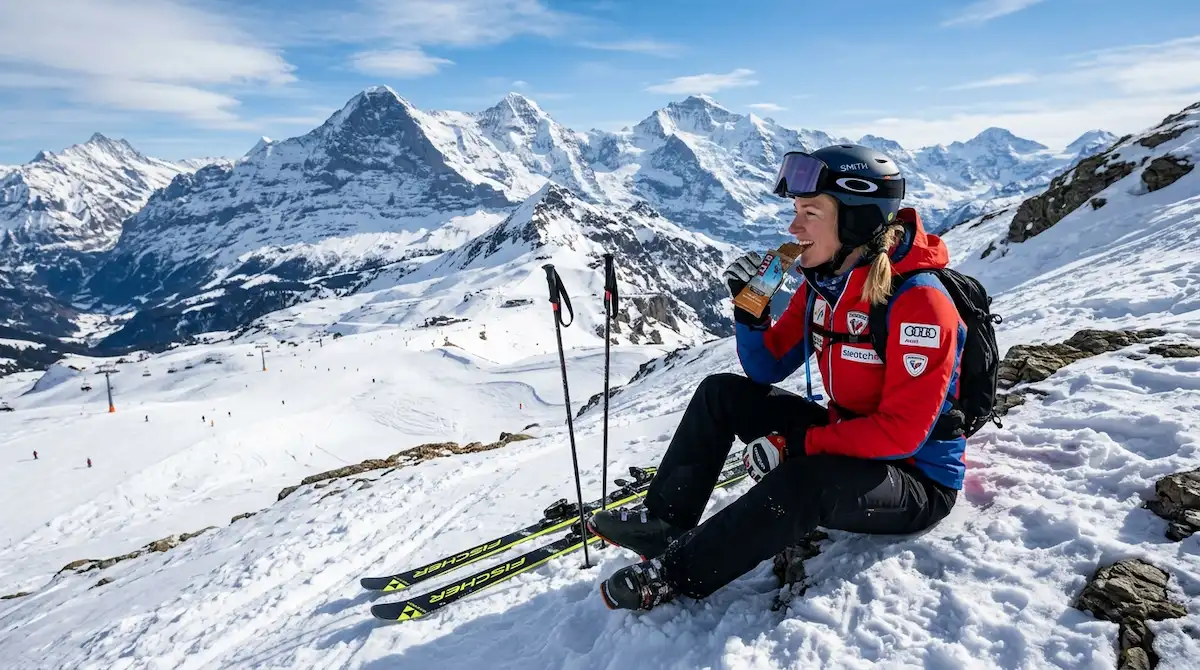
Ski racing demands more than just sharp edges and physical strength; it requires a body that is fueled to handle the extreme conditions of the mountains.
When you are standing at the start gate in Zermatt or Saas-Fee, your muscles need to be ready for explosive movements in freezing temperatures. The effort you put into your training during the off-season only pays off if your internal engine has the right gasoline.
This is why professional athletes spend just as much time planning their meals as they do studying the course map. You need a strategy that covers everything from the moment you wake up on Monday until you cross the finish line on Sunday.
At Ski Zenit, we see athletes from all over the world coming to Switzerland to push their limits. We understand that the environment here is unique. The air is dry, the altitude is high, and the intensity of the gates is relentless.
To stay competitive, you have to look at your food as a tool for performance. It is not just about eating enough; it is about eating the right things at the right time to ensure your glycogen stores are full and your focus remains sharp. This guide will help you navigate the complexities of mountain nutrition so you can arrive at the start hut feeling powerful and prepared.
Content
Strategic preparation in the early week
The days leading up to a competition are when the real work happens for your metabolism. You cannot expect to eat a big bowl of pasta the night before and have it solve all your energy needs.
Your body needs several days to saturate the muscles with the energy required for high-intensity slalom or giant slalom runs. During this phase, you should focus on consistency and high-quality ingredients that support muscle repair and energy storage.
Building the base with complex carbohydrates
In the first half of your race week, your meals should center around complex carbohydrates that provide a steady release of energy. Think about brown rice, sweet potatoes, quinoa, and whole-grain breads.
These foods take longer for your body to break down, which helps maintain a stable blood sugar level throughout your training sessions. When you are out on the glacier for four or five hours, you don’t want to experience the “bonk” or a sudden drop in energy.
As you train, your muscles are constantly using up their stored glucose. By focusing on these complex sources early on, you are essentially topping off your tank every single day.
It is also a good time to include lean proteins like chicken, turkey, or tofu to help repair the micro-tears in your muscle fibers caused by the high G-forces of racing turns. You want to enter the final days of the week with muscles that are fully recovered and ready for the peak effort of the race.
Micronutrients for recovery and focus
While macros like carbs and protein get most of the attention, micronutrients are the silent partners in your success. Magnesium and potassium are particularly important for ski racers because they play a massive role in muscle contraction and preventing cramps. The cold weather often masks the fact that your muscles are working incredibly hard and losing minerals through sweat, even if you don’t feel “hot.”
Including leafy greens, nuts, seeds, and bananas in your daily routine during the early week will help keep your nervous system functioning at its best. Your reaction time in the gates depends on your nerves firing correctly, and that process requires a balance of electrolytes and minerals. If you are deficient in these, you might find your legs feeling heavy or your focus drifting during the second half of a long course.
The specific role of carb loading skiing
As the race weekend approaches, usually starting about 48 to 72 hours before the event, the strategy shifts toward carb loading skiing to ensure maximum glycogen availability. This doesn’t mean eating everything in sight, but rather increasing the percentage of your calories that come from carbohydrates while slightly decreasing fat and fiber intake. Reducing fiber is a tactical move to prevent any digestive discomfort or “heavy” feelings on race day.
During this window, you might switch from whole grains to white rice or white pasta, which are easier for the body to process quickly. You want your muscles to be like sponges, soaking up every bit of glucose.
This ensures that when you kick out of the start house, your fast-twitch muscle fibers have immediate access to the fuel they need for those explosive first three gates. It is a proven method used by elite athletes in the Swiss Alps to maintain power from the top of the mountain all the way to the finish area.
Managing physiology at high elevation
Training and racing in places like Saas-Fee or Zermatt means dealing with altitudes that can exceed 3,500 meters. At these heights, your body undergoes several physiological changes.
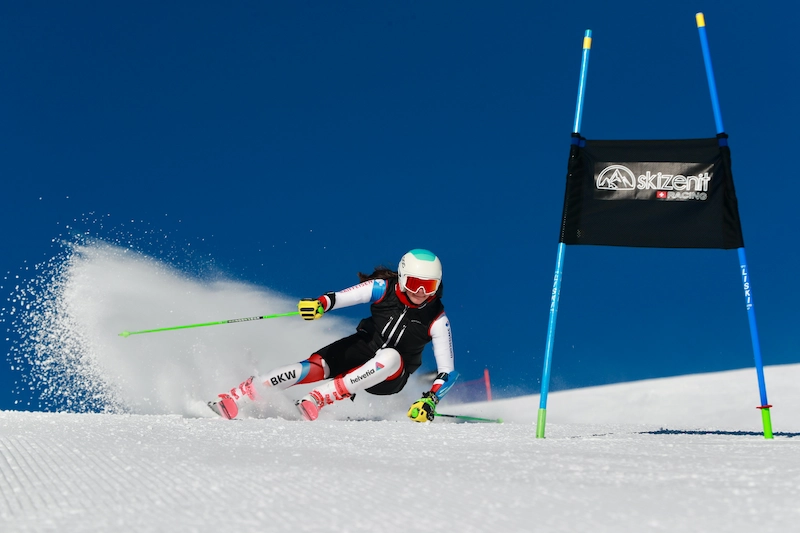
Your heart rate increases, your breathing becomes more rapid, and your metabolic rate actually speeds up. This means you are burning more calories just by existing in the cold, thin air. If you don’t adjust your intake, you will find yourself in a caloric deficit before the race even begins.
The impact of athlete hydration at altitude
One of the greatest challenges in the mountains is staying hydrated. The air at high altitudes is incredibly dry, and every time you exhale, you are losing moisture. Because the air is cold, you might not feel thirsty in the same way you do during a summer workout.
However, athlete hydration altitude is a factor that can make or break your performance. Even a 2% drop in hydration can lead to a significant decrease in cognitive function and physical power.
To combat this, you should be sipping water consistently throughout the day, not just when you are thirsty. A good rule of thumb is to check the color of your urine; it should be pale yellow.
If it is dark, you are already behind. In the dry Swiss climate, you also lose fluids through “insensible perspiration,” where sweat evaporates so quickly off your skin that you never feel damp. You must be proactive about drinking water from the moment you wake up until you go to bed.
Electrolyte strategies for the cold
Water alone is often not enough when you are training at an elite level. You need electrolytes—sodium, potassium, and magnesium—to help your body actually retain the water you are drinking. In the cold, your body’s thirst mechanism is suppressed, and you might also experience increased urination due to “cold diuresis.” This makes it even harder to stay balanced.
Using an electrolyte mix in your water bottle while you are on the lift can be a game-changer. It helps maintain the osmotic pressure in your cells, ensuring that your muscles stay hydrated and your blood volume remains high.
High blood volume is necessary for transporting oxygen to your working muscles, which is already difficult enough in the thin air of the glaciers. If you find yourself getting headaches or feeling unusually fatigued after a morning of training, it is likely an electrolyte imbalance rather than just tiredness.
Digestion in thin air
Altitude can also slow down your digestive system. Blood is often diverted away from the stomach to the working muscles and the lungs to help with oxygen transport. This means that heavy, fatty meals can sit in your stomach for a long time, leading to bloating or nausea. When you are in the middle of a race week, you want to choose foods that are easy to digest.
Instead of three massive meals, many athletes find success with five or six smaller meals throughout the day. This keeps a steady stream of nutrients entering the bloodstream without overloading the digestive tract. It also helps keep your energy levels stable.
When you are at a Ski Zenit camp, we often see that athletes who snack on small amounts of fruit, crackers, or energy bars between runs stay much sharper than those who wait for a massive lunch at the mountain restaurant.
Execution during the competition window
When the race day finally arrives, your focus should be entirely on your line and your technique. You don’t want to be worrying about an upset stomach or a sudden energy crash. The 24 hours leading up to the first run are about maintaining the stores you have built up and ensuring your blood sugar is perfectly leveled for the start.
The night before the gates
Dinner the night before the race should be familiar and comforting. This is not the time to try a new local Swiss dish or a spicy meal that might cause issues overnight. Stick to what you know works for your body. A classic choice is a lean protein with a large portion of easily digestible carbohydrates, like grilled chicken with white rice and some steamed carrots.
Avoid eating too late in the evening. You want your body to be finished with the heavy lifting of digestion by the time you go to sleep so that your energy can go toward deep recovery and cellular repair. Sleep is the most powerful recovery tool you have, and a stomach that is working too hard can disrupt your sleep cycles. Aim for a meal that leaves you feeling satisfied but light.
Essential race day breakfast tips
Your morning meal is the final “top-off” for your energy stores. The goal here is to provide enough fuel to get through your inspection and your first run without causing any GI distress. Following specific race day breakfast tips can help you find that perfect balance. Most racers do best with a combination of fast-acting and slow-releasing carbs, such as oatmeal with a bit of honey and a sliced banana.
Try to eat your breakfast at least two to three hours before your start time. This gives your body plenty of time to move the food out of the stomach and into the small intestine, where it can be absorbed. If you get nervous before a race and find it hard to eat solid food, a liquid smoothie with oats, fruit, and a bit of protein powder can be an excellent alternative. The key is to never skip this meal; your brain needs the glucose to make the split-second decisions required on a technical course.
Maintaining energy between runs
The gap between the first and second run can be anywhere from one to three hours, depending on the event and the weather. This is a critical time for refueling. You have already burned a significant amount of energy during your first run and the warm-up, and you need to replenish those stores for the final push. However, you cannot eat a full lunch, as you will likely be back on the course before it is digested.
Small, frequent snacks are the way to go. A piece of fruit, a simple granola bar, or a few pretzels can provide the necessary boost. You want to focus on simple sugars here that can get into your bloodstream quickly. Keep your hydration levels up during this time as well. Even if it is snowing or windy, keep sipping your electrolyte drink. Many races are won or lost in the second run based on who has the most energy left in the tank.
Long term success and nutritional recovery
Once the race is over, your job is not quite done. The way you treat your body in the hours following a competition will determine how quickly you recover for the next day of racing or the next block of training. Recovery is an active process, and nutrition is its foundation.
The post-race window
There is a “window of opportunity” about 30 to 60 minutes after you finish your last run where your muscles are most receptive to nutrients. During this time, an enzyme called glycogen synthase is highly active, meaning your body is primed to rebuild its energy stores. A recovery drink or a snack that contains both protein and carbohydrates is ideal here.
This immediate refueling helps stop the breakdown of muscle tissue and starts the repair process right away. If you wait several hours to eat until you get back to the hotel or the village, you will likely feel much more sore the next day. Even a simple chocolate milk or a turkey sandwich can make a massive difference in your recovery rate. It is about being disciplined enough to prioritize your body even when the adrenaline of the race is wearing off.
Adapting to different climates
While we spend a lot of time in the Swiss Alps, ski racing also takes us to places like the Andes in Chile during the summer months. Each environment requires slight adjustments to your plan. In Chile, the humidity might be different, or the local food options might vary. The core principles of your nutrition plan for ski race week should remain the same, but you must be flexible.
Learning how to read food labels and understand basic nutritional values allows you to maintain your performance anywhere in the world. Whether you are eating at a high-end hotel in St.
Moritz or a small mountain hut in South America, look for those clean sources of fuel. Consistency is what separates the top-tier athletes from the rest of the pack. When you travel, consider bringing some of your own familiar snacks or electrolyte tabs to ensure you always have what you need.
Building a sustainable routine
The most successful athletes don’t just follow a plan for one week; they build habits that last all year. Nutrition should not feel like a chore or a restriction. It is an investment in your goals.
As you spend more time training with us at Ski Zenit, you will start to learn exactly what your body needs. You will notice how your energy levels change based on what you ate the night before or how much water you drank during the day.
This self-awareness is a vital skill for any competitive skier. Pay attention to the signals your body sends you. If you are feeling sluggish, look at your carb intake. If you are cramping, look at your hydration and minerals.
By treating your nutrition with the same level of detail as your ski tuning, you give yourself a massive competitive advantage. Over time, these choices become second nature, and you will find that your performance on the snow becomes much more consistent.
Our team at Ski Zenit is dedicated to providing you with the best possible environment to excel. We know that every detail matters, from the way you visualize the course to the way you fuel your muscles.
By following a structured approach to your meals and hydration, you are setting yourself up for success on the world-class slopes of Switzerland and beyond. The mountains are demanding, but with the right preparation, you can turn those challenges into your greatest strengths.
Are you ready to take your competitive skiing to the next level? Join our competitive skiing program, perfect your technique, master gate technique and track strategy, or visit the competitive skiing camp for professional training and advice on the equipment that will help you win.