
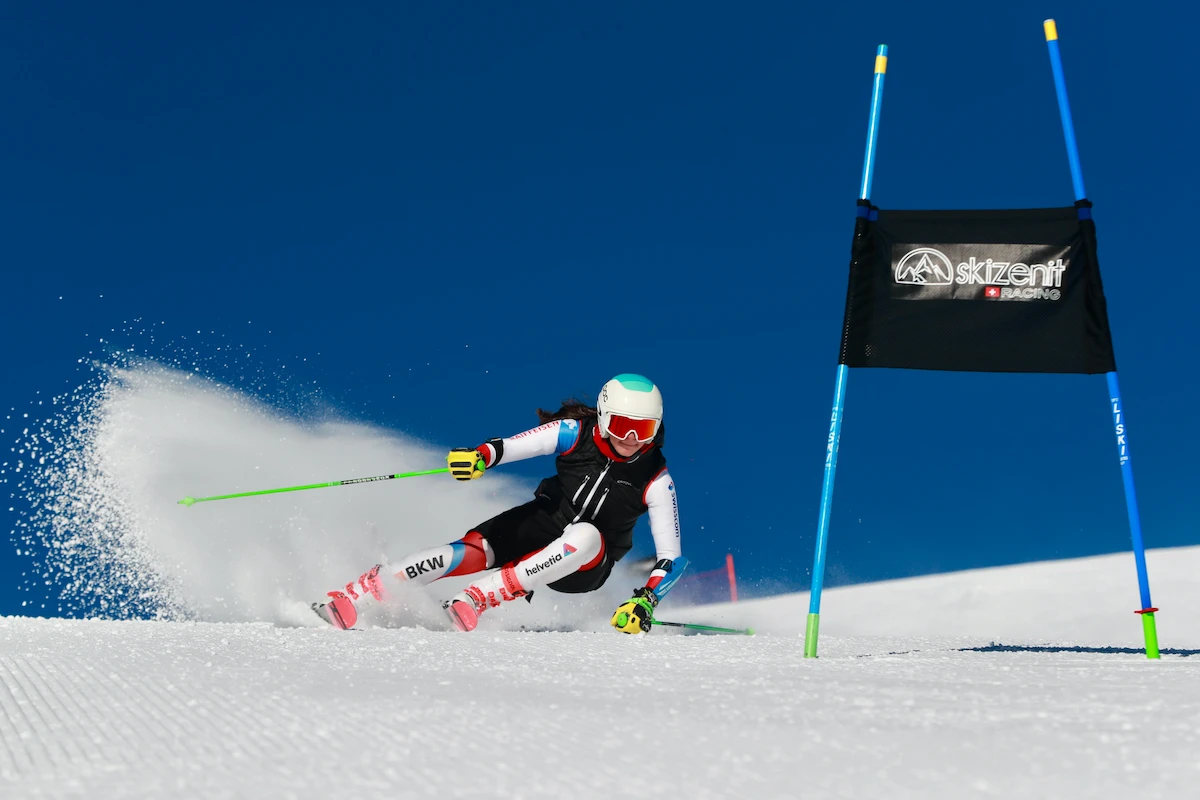
When you are standing at the starting gate of a giant slalom course in Saas-Fee, every piece of equipment on your feet has a specific job to do. Most athletes focus on the wax on their bases or the sharpness of their edges, but the safety systems integrated into your bindings are just as important for a successful day on the mountain.
One such component is the ski stop, a mechanical device designed to prevent your equipment from becoming a dangerous projectile in the event of a crash or a pre-release. While it might seem like a simple part of the binding, its design and functionality are governed by strict regulations and physical requirements that every serious racer should understand.
This device remains tucked away during your run to ensure it does not interfere with your edge angles, yet it must deploy instantly the moment your boot leaves the binding. For those training at an elite level, knowing how these mechanisms work and how to maintain them is a part of professional preparation.
The transition from old-fashioned safety leashes to modern braking systems changed the way we approach safety on the slopes. In the past, a leather or nylon strap kept the ski attached to the ankle, which often resulted in the ski hitting the athlete during a fall.
The introduction of the spring-loaded brake arm allowed the ski to separate from the racer while ensuring it stayed relatively close to the point of the fall. This change significantly reduced the risk of leg injuries caused by the “windmill” effect of a tethered ski.
Today, the technology has evolved to be lighter, more aerodynamic, and more reliable under the extreme forces of professional racing. As you progress in your training, you will notice that the requirements for these brakes become more specific depending on the discipline you are practicing, whether it is the tight turns of slalom or the high speeds of downhill. Each environment, from the icy glaciers of Switzerland to the summer camps in Chile, demands that your gear performs perfectly every time.
Understanding the mechanics of your gear is part of being a complete athlete. It is not just about the physical strength or the line you take through the gates; it is about the synergy between the human body and the precision instruments used to carve through ice.
The braking system is a silent partner in this process. It stays under tension throughout your entire run, vibrating with the chatter of the ice but never deploying until it is truly needed.
This reliability is what allows you to push your limits with the confidence that your equipment will behave predictably. In the following sections, we will look at the technical aspects of these devices, how to choose the right width for your race skis, and the maintenance routines that keep them functioning in the harshest winter conditions.
Content
The mechanics and physics of the braking system
The way a modern alpine brake works is based on a relatively simple spring-loaded lever system. When the heel piece of the binding is cocked and the boot is stepped into, the weight of the athlete pushes down on a plastic or metal pedal.
This action pulls the two metal arms upward and inward, locking them into a position that is parallel to the ski or tucked slightly above the top sheet. This retracted position is vital because it prevents the arms from dragging in the snow when you are at high edge angles.
If a brake arm were to catch the snow during a turn, it could cause a “boot out” effect, lifting the edge off the ice and leading to a crash. Therefore, the clearance and the width of the arms must be perfectly matched to the waist of the ski. Most race skis have narrow waists, typically between 63mm and 68mm, which requires a specialized narrow brake to maintain a streamlined profile.
When the binding releases—either due to a fall or because the force threshold has been exceeded—the pressure on the pedal is removed. At that exact moment, a heavy-duty internal spring forces the arms downward.
The arms rotate on a pivot point, extending below the base of the ski. The tips of these arms are usually covered in a high-friction plastic or rubber material designed to dig into the snow and ice.
The physics here is straightforward: the arms create drag and physical resistance against the surface of the mountain, slowing the ski down until it comes to a complete halt. This is particularly important on the steep, injected faces found in World Cup or elite-level training tracks where a runaway ski could easily reach lethal speeds before hitting a fence or another person.
The tension of the spring is a factor that many professionals monitor closely. If the spring is too weak, the brake might not deploy fast enough or with enough force to stop the ski on hard ice.
Conversely, the mechanism must be designed so that it does not interfere with the release values of the binding. The interaction between the brake pedal and the AFD (Anti-Friction Device) is a delicate balance.
Any friction or obstruction in this area can lead to inconsistent release settings, which is a major safety risk. High-end race bindings, like those from Look, Marker, or Tyrolia, often have integrated brake systems that are built specifically to work with their race plates.
These systems are tested to ensure that the deployment of the brake does not add any “ghost” tension to the DIN settings, keeping the athlete’s safety as the top priority during competitive skiing sessions.
Choosing the correct width for race skis
One of the most common mistakes in equipment setup is using a brake that is too wide or too narrow for the ski. In the world of elite racing, precision is everything. If you use a 90mm brake on a 65mm slalom ski, the arms will stick out significantly on either side.
This creates a massive risk of catching the arms on the snow during deep carves. As you lean the ski over to 60 or 70 degrees of inclination, those protruding arms will act like a lever, popping your edge out of the ice.
On the other hand, a brake that is too narrow will not deploy properly or might get stuck on the sidewalls of the ski, rendering it useless. You want a fit that is as close as possible to the waist width of the ski without touching the edges when retracted.
| Ski type | Typical waist width | Recommended brake width | Reasoning |
|---|---|---|---|
| Slalom (SL) | 63mm – 67mm | 75mm – 80mm | Minimal overhang to allow for extreme edge angles. |
| Giant Slalom (GS) | 65mm – 68mm | 75mm – 80mm | Similar to SL, needs to be tucked tight to avoid drag. |
| Super-G / Downhill | 70mm – 85mm | 85mm – 90mm | Stability and reliable deployment at very high speeds. |
| Masters / All-mountain | 75mm – 88mm | 85mm – 95mm | Versatility for different snow conditions and wider bases. |
As you can see in the table above, the tolerance for error is quite small. Most manufacturers offer brakes in specific increments. For a dedicated race setup, you should always aim for the narrowest option that clears the ski.
Some technicians even slightly bend the arms of a brake to get a more custom fit, though this must be done with extreme care to avoid weakening the metal.
If the metal is stressed too much, it can snap during a cold morning in Zermatt, where the temperatures can make materials more brittle. It is always better to buy the correct size from the start rather than trying to modify a part that is not meant for that specific ski width.
Another aspect to consider is the height of the brake arms. In speed events like Downhill or Super-G, the skis are much longer and the forces are higher. The brakes for these skis are often reinforced to handle the vibration.
Aerodynamics also play a small role; while the brake is retracted, it should be as flush with the binding as possible. Any part that sticks out creates a small amount of turbulence.
While this might not matter for a recreational skier, for a professional athlete looking for hundredths of a second, every millimeter of drag counts. The integration between the race plate and the brake is a key area where modern innovation has allowed for much cleaner profiles than what was available a decade ago.
FIS regulations and safety standards
The International Ski Federation (FIS) has very specific rules regarding equipment to ensure a level playing field and, more importantly, the safety of the athletes and spectators. According to FIS standards, every ski used in competition must be equipped with a functional braking device.
During the equipment control phase of a major race, officials may check if your brakes deploy correctly. If a brake is tied up with a rubber band (a common practice during tuning) and the athlete forgets to remove it before the start, they can be disqualified. The rule exists because a runaway ski on a steep, icy racecourse is effectively a sharp, heavy spear that can cause catastrophic injury to anyone down the mountain.
FIS rules also specify that the brake must not interfere with the release of the binding. This means the pedal must be smooth and the arms must not catch on the boot or the clothing of the racer.
There are also regulations regarding the “stand height” of the entire binding system, including the brake. This is to prevent athletes from having too much leverage over the ski, which can lead to increased risk of knee injuries.
When you are setting up your gear for a FIS-sanctioned event, you must ensure that all components are “retail available” or approved prototypes that meet these strict dimensions. Working with a professional coach or a specialized technician can help you stay within these rules while still maximizing your performance.
Beyond the FIS rules, local resort regulations in places like Switzerland often mandate the use of brakes. In some regions, if you are found skiing without a functional ski stop, you could be held liable for any damages or injuries caused by your equipment. This legal aspect is something that many professional athletes take very seriously.
It is part of the “code of the mountain.” As we saw earlier, the transition from leashes to brakes was a major safety milestone, and maintaining that standard is a collective responsibility. Whether you are training on the glaciers or competing in a local cup, your gear must reflect the highest standards of safety and professionalism.
The impact of extreme cold on equipment performance
Training in high-altitude environments like Zermatt or Saas-Fee introduces unique challenges for your equipment. When the mercury drops well below freezing, the physical properties of plastics and metals change.
The grease inside a binding can thicken, and the springs in your braking system can become less responsive. This is why it is vital to keep your equipment clean and free of old, contaminated lubricant.
A brake that works perfectly in a warm shop might move sluggishly when it is -20 degrees Celsius on the glacier. This delay in deployment could be the difference between a ski staying near you and it disappearing down a crevasse or a steep face.
Ice buildup is another significant issue in cold-weather racing. During a run, snow can get packed into the mechanism. If this snow melts slightly due to the friction of the moving parts and then refreezes, it can lock the brake in the retracted position.
Professional racers often use a small brush or a specialized spray to prevent ice from sticking to the critical parts of the binding. Before you click into your skis for a race run, it is a good habit to manually flick the brake arms to ensure they move freely.
This simple check takes two seconds but provides peace of mind that the safety system is ready to go. We will look at this in more detail later when we discuss daily maintenance routines.
The materials used in high-end brakes are chosen for their ability to withstand these temperature fluctuations. Hardened steel is typically used for the arms to ensure they don’t bend under the weight of the ski, while the housing is often a reinforced composite.
However, even the best materials have limits. Repeated stress from clicking in and out, combined with the vibration of skiing on injected ice, can lead to fatigue over time.
As an athlete, you should inspect your gear for hairline cracks or bent components at least once a week. If you notice that one arm is hanging lower than the other when retracted, it is a sign that the spring or the housing is compromised and needs replacement.
Installation and technical setup
Installing a braking system onto a race binding is a task that requires precision. Unlike recreational bindings where the brake is often pre-installed, race bindings often come in modules.
This allows the athlete to choose the specific brake width and type for their setup. When mounting the brake, it must be perfectly centered over the ski. If it is slightly offset, one arm will be closer to the edge than the other, increasing the risk of drag.
The screws or clips used to secure the brake must be tightened to the manufacturer’s specifications. Over-tightening can crack the plastic baseplate, while under-tightening can lead to the brake rattling loose during a high-speed run.
The interaction between the brake and the race plate is another technical area to watch. Many race skis use a “piston” or a floating plate system to allow the ski to flex naturally.
The brake must be mounted in a way that does not bridge this flex. If the brake housing is too long or incorrectly positioned, it can create a “dead spot” in the ski’s flex pattern, making the ski feel stiff and unresponsive underfoot.
High-performance setups often use a “floating” brake design that moves with the binding to maintain a consistent feel. This level of detail is what separates a standard setup from an elite racing machine. When you are working on your track strategy, having a ski that flexes exactly how you expect it to is a major advantage.
For those using the Look Pivot bindings, which are popular among many technical racers, the brake system is unique. The “turntable” heel piece means the brake rotates with the heel.
This design is praised for its safety and consistent release, but it requires a specific technique for installation and removal. You must ensure that the brake arms do not interfere with the rotation of the heel piece.
If you are switching between different pairs of skis, it is often easier to have a dedicated set of bindings and brakes for each pair rather than trying to swap them in the field. This reduces the wear and tear on the mounting points and ensures that your settings remain consistent throughout the season.
Maintenance and troubleshooting for athletes
A professional maintenance routine is what keeps your gear in top shape throughout a long season. Your brakes should be part of your daily equipment check. After a day of training, rinse your skis with fresh water if you have been in an area where salt or chemicals are used on the snow.
This prevents corrosion on the metal arms and the internal springs. Once the skis are dry, inspect the plastic tips of the brakes. If they are worn down or missing, the brake will not have the same stopping power on ice. Most manufacturers sell replacement tips, or you may need to replace the entire brake arm depending on the model.
One common issue racers face is the “bent brake arm.” This usually happens during a fall or when skis are being transported. A bent arm might not retract fully, causing it to catch on the snow. While it is tempting to just bend it back with a pair of pliers, you have to be careful.
Repeated bending weakens the metal. If the arm feels soft or shows signs of stress whitening, it is time for a new one. Another issue is the “sticky brake,” where the arms don’t deploy quickly when the boot is removed.
This is usually caused by a buildup of old grease and dirt. Cleaning the pivot points with a degreaser and applying a small amount of silicone-based lubricant can solve this problem. Avoid using heavy oils that attract more dirt.
During travel, your brakes are particularly vulnerable. When you pack your skis into a double ski bag for a trip to Chile or the Alps, the pressure from other skis can easily bend the arms. Using “brake retainers” or thick rubber bands to keep the brakes in the retracted position during transport is a good idea.
This keeps the profile of the ski slim and protects the arms from being crushed. Just remember to remove them before you head to the lift. Many athletes also use a “ski spacer” or a piece of foam between the skis to keep the brakes from tangling with each other.
Taking these small steps in your routine will ensure that when you arrive at your destination, your gear is ready for elite training without any unpleasant surprises.
Performance impact on the racecourse
While the primary function of the brake is safety, its secondary impact is on performance. As we have mentioned, drag is the enemy of speed. In a sport where races are won or lost by a thousandth of a second, every detail matters.
A well-fitted brake is tucked so tightly against the binding that it becomes almost invisible to the wind and the snow. In speed disciplines, where you might be traveling at over 100 km/h, the vibration of the equipment is a factor. If the brake mechanism is loose, it can vibrate, creating a distracting noise and potentially affecting the stability of the ski. High-end race brakes are designed with tight tolerances to minimize this chatter.
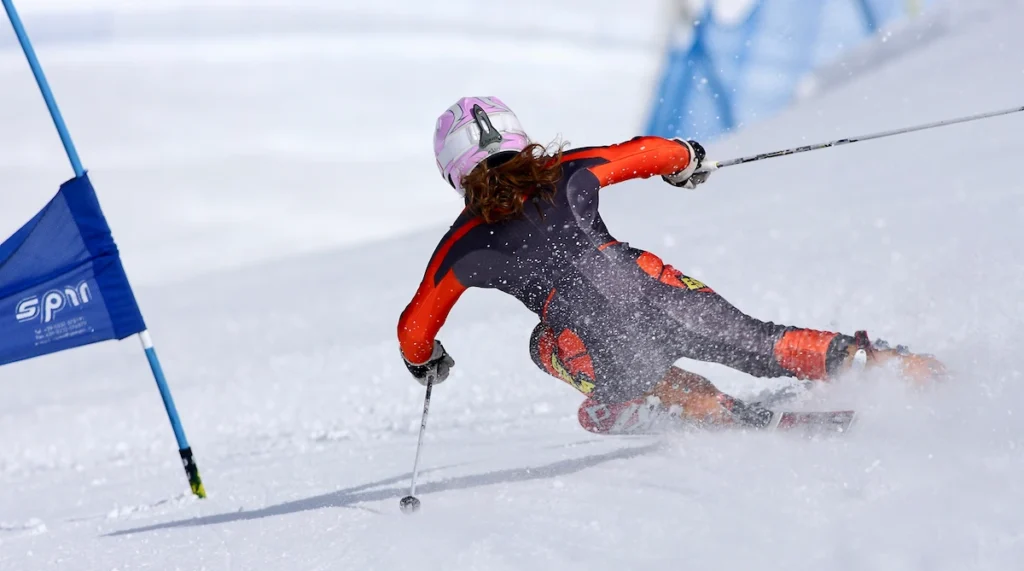
The weight of the brake is another consideration. While you want a robust system, you also want to keep the “swing weight” of the ski as low as possible. A lighter ski is easier to maneuver in quick slalom turns.
Manufacturers are constantly experimenting with new materials, such as magnesium or carbon-reinforced plastics, to reduce the weight of the brake housing without sacrificing strength. When you are comparing different binding systems, look at the total weight including the brake. For a young athlete, a lighter setup can reduce fatigue over a long day of training, allowing for more quality gates and better technical focus.
Finally, there is the psychological aspect. Knowing that your gear is professionally maintained and meets all safety standards allows you to focus entirely on your performance.
You don’t want to be thinking about your equipment when you are in the starting hut. You want to be thinking about your line, your timing, and your technique. A reliable ski stop is part of that “set it and forget it” mentality. You trust it to be there if things go wrong, which gives you the freedom to take the risks necessary to win. This confidence is a key part of the mental game in competitive skiing, and it starts with the smallest components of your gear.
Environmental considerations and longevity
The lifespan of a braking system depends heavily on how it is treated and the environments where it is used. Glacial skiing, common in our Swiss camps, is particularly abrasive.
The “rock flour” or fine silt found on glaciers can get into the moving parts of your bindings and act like sandpaper. This accelerates the wear on the pivot points of your brakes. If you spend a lot of time training on glaciers, you will need to be more diligent with your cleaning routine. Rinsing your bindings thoroughly after every session is not just a suggestion; it is a necessity for gear longevity.
On the other hand, training in the Southern Hemisphere during the summer often involves different snow textures. The snow in Chile can be very different from the injected ice of Europe.
Softer snow might not require as much force to stop a ski, but it can be more prone to clogging the brake mechanism. Regardless of where you are in the world, the goal is the same: consistent, reliable performance.
A good set of brakes should last at least two to three seasons of heavy use if maintained properly. However, for a professional athlete who is on the snow 200 days a year, an annual replacement of the brake system is a cheap insurance policy against equipment failure.
As you move through your career from a junior racer to a professional or a masters athlete, your relationship with your equipment will evolve. You will start to notice the subtle differences in how different brands handle brake integration and how different widths affect your feel for the snow.
This attention to detail is what defines an expert. You aren’t just a passenger on your skis; you are the pilot of a complex machine. Every part of that machine, down to the spring in your brake, deserves your respect and attention. By taking care of your gear, you are taking care of your safety and your future on the podium.
Improving your performance with the right gear
As you have seen throughout this article, even a seemingly minor component like the braking system plays a vital role in your success as an athlete. From ensuring you meet FIS regulations to preventing dangerous runaway skis on the steep slopes of Zermatt, the ski stop is an essential part of your racing kit.
Being a professional means paying attention to these details. It means knowing your equipment inside and out, from the way your boots interface with the bindings to the way your brakes deploy in a split second. This knowledge gives you the confidence to push harder, turn tighter, and ski faster.
In the world of elite alpine racing, there is no room for “good enough.” Your gear must be perfect, your physical condition must be peak, and your mental focus must be absolute.
By understanding the mechanics, physics, and maintenance of your braking system, you are taking another step toward becoming a more complete and professional athlete.
Whether you are a young racer just starting out, a seasoned professional, or a dedicated masters athlete, the principles of equipment care remain the same. Respect your gear, and it will take care of you when you are on the limit.
The journey to the top of the podium is built on a foundation of hard work and attention to detail. Every day you spend on the glacier, every gate you pass, and every hour you spend in the tuning room contributes to your progress.
We have seen how environmental factors like extreme cold and glacial silt can affect your gear, and we have discussed the importance of a rigorous maintenance routine. These are the habits of champions. As you continue to develop your skills, keep these technical insights in mind. They will serve you well whether you are training in the shadow of the Matterhorn or competing on the world stage.
Success in this sport is about the harmony between the athlete and their equipment. When everything is dialed in—the wax, the edges, the DIN settings, and the brakes—you can truly express your potential on the snow.
You can trust your equipment to respond to your inputs and to protect you when necessary. This trust is what allows you to find that extra gear in the final flush of a slalom course or to hold your line in a high-speed GS turn. Take the time to audit your gear today. Check your brakes, inspect your bindings, and ensure that everything is ready for your next session on the snow.
The technical side of skiing can be complex, but it is also incredibly rewarding. The more you know about how your equipment works, the more you can fine-tune it to suit your specific needs and style.
This level of customization is what elite athletes use to find their edge. As you move forward in your training, don’t be afraid to ask questions and seek out expert advice. The community of alpine racing is full of knowledge, and tapping into that expertise is one of the fastest ways to improve. Your gear is a reflection of your dedication to the sport, so make sure it is telling the right story.
Are you ready to take your competitive skiing to the next level? Join our competitive skiing program, perfect your technique, master gate technique and track strategy, or visit the competitive skiing camp for professional training and advice on the equipment that will help you win.
We are here to help you navigate the complexities of elite racing, from technical drills on the snow to the fine details of your gear setup. Our programs in Switzerland and Chile are designed to provide athletes of all ages and nationalities with the tools they need to succeed. Let’s work together to reach your goals and see what you are truly capable of on the mountain.