
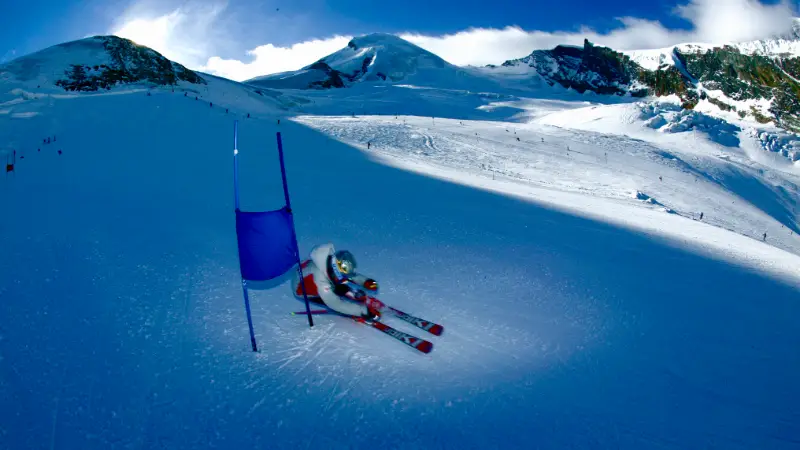
The moments before stepping into the starting gate are a complex blend of physical readiness, mental focus, and tactical planning. For a competitive ski racer, this period is not just a waiting game; it’s an active, structured process that directly influences performance.
A well-designed pre-race activation sequence goes far beyond a few simple stretches. It’s a systematic approach to preparing the body’s neuromuscular systems for the explosive, high-intensity demands of a race run.
It involves priming the mind to execute a precise plan under immense pressure. The difference between a spot on the podium and a disappointing finish can often be traced back to the quality of this preparation.
An athlete who arrives at the start with a cold body, a scattered mind, or an unclear race line is already at a significant disadvantage, regardless of their technical skill or physical conditioning.
Many developing athletes, and even some seasoned competitors, fall into the trap of a generic or incomplete warm-up. They might jog in place, do a few static hamstring stretches, and call it a day. This approach fails to address the specific requirements of ski racing.
Our sport demands a unique combination of power, agility, stability, and fine motor control, all executed in a cold environment. Therefore, the preparation must be equally specific. It needs to elevate core body temperature, increase blood flow to the muscles, activate the central nervous system, and rehearse the exact movement patterns that will be used on the course.
This is not about inducing fatigue; it’s about achieving a state of optimal readiness. It’s about ensuring that from the very first gate, the body is firing on all cylinders and the mind is sharp, clear, and focused on the task at hand.
Over years of working with athletes from junior levels to the World Cup circuit, we have refined a methodology that systematically builds this state of readiness, turning pre-race anxiety into focused energy.
Content
Phase 1: General physical preparation away from the slopes
The race day begins long before you click into your bindings. The initial phase of preparation happens indoors or at the base of the mountain, focusing on waking up the body and elevating its core functions.
This isn’t about high-intensity work; it’s a gradual and controlled process of transitioning the body from a state of rest to one of athletic readiness. The primary goals are to increase heart rate, warm the muscles and joints, and stimulate the nervous system.
A common mistake is to either skip this step entirely, assuming the ski down to the course is sufficient, or to do too much, too soon, expending valuable energy. The environment here is controlled, allowing for precise movements without the distractions of a busy race venue or the challenges of cold weather and bulky ski boots. This foundational work sets the stage for the more specific, on-snow activation that follows.
Dynamic stretching and mobility
Static stretching, where you hold a stretch for an extended period, has largely been replaced by dynamic movements in modern athletic preparation, especially before competition.
For a ski racer, holding a cold muscle in a static stretch can actually decrease its power output and responsiveness. Instead, the focus should be on dynamic stretching and mobility exercises that take the joints through their full range of motion.
This process actively warms the muscles, lubricates the joints with synovial fluid, and improves neuromuscular communication. Think of it as telling your body which movement patterns it’s about to perform. Movements should be controlled and deliberate, not ballistic or jerky.
A well-rounded dynamic routine for a ski racer should target the key joints and muscle groups involved in the sport. This includes the hips, ankles, and thoracic spine. For the hips, exercises like leg swings (forward-backward and side-to-side), walking lunges with a torso twist, and “gate openers” (lifting the knee and rotating the hip outward) are highly effective.
For ankle mobility, which is critical for achieving deep flexion in ski boots, ankle circles and rocking back and forth from heel to toe are beneficial. Thoracic spine mobility, essential for maintaining a stable upper body while the lower body rotates, can be addressed with exercises like quadruped T-spine rotations. This routine should last approximately 15-20 minutes and leave you feeling warmer, looser, and more connected to your body without any sense of fatigue.
Cardiovascular activation
Once the joints are mobile, the next step is to gently elevate the heart rate and increase overall body temperature. This is the “warm-up” in its most literal sense. The goal is light cardiovascular activity that gets the blood flowing to the extremities and prepares the cardiorespiratory system for the work ahead. This is not a conditioning session; it’s a primer.
The intensity should be low to moderate, enough to break a light sweat but not so much that you feel breathless. You should be able to hold a conversation comfortably throughout this phase.
Effective methods for this activation include a light jog, skipping rope, or using a stationary bike if one is available at the lodge. Skipping rope is particularly useful as it also enhances coordination and foot speed, which are valuable assets for a ski racer’s agility.
A typical duration for this phase is 5 to 10 minutes. Some athletes prefer to do this outdoors to begin acclimatizing to the temperature, while others prefer the controlled environment of an indoor space. The choice depends on personal preference and logistical constraints at the race venue.
The key is to transition the body from a resting metabolic rate to an active one, signaling that a period of high physical demand is approaching. This gradual increase in physiological activity helps prevent the shock to the system that can occur when an athlete goes from standing still to an explosive race start.
Neuromuscular priming
The final component of the off-snow preparation is neuromuscular priming, also known as activation. This step is about waking up the specific muscles and neural pathways that are responsible for stability and power in skiing.
While dynamic stretching begins this process, activation exercises are more targeted and often isometric or involve light resistance. The focus is on creating a strong mind-muscle connection, particularly with the stabilizing muscles that are often overlooked but are absolutely vital for maintaining balance and transferring force through the skis. A strong, stable core and activated glutes are the foundation of powerful skiing.
Key activation exercises for ski racers target the gluteal muscles, the core, and the small stabilizer muscles around the hips and shoulders. A simple and effective sequence could include glute bridges, bird-dogs, planks (front and side), and band walks.
For glute bridges, the athlete lies on their back and lifts their hips, focusing on squeezing the glutes at the top of the movement. This fires up the primary power-producing muscles for extending the hip.
Bird-dog, performed on all fours while extending an opposite arm and leg, challenges core stability and coordination. Band walks, with a resistance band around the ankles or knees, specifically activate the gluteus medius, a muscle critical for preventing the knee from collapsing inward (valgus collapse) under the high G-forces of a turn.
This phase is short, typically 5-10 minutes, and uses bodyweight or light bands. It’s not about building strength, but about reminding the nervous system to recruit these muscles effectively once you’re on the snow.
Phase 2: On-snow preparation and course inspection
Transitioning onto the snow marks a significant shift in the preparation process. The focus now moves from general readiness to sport-specific activation. The feel of the snow, the temperature, the visibility, and the equipment itself all become part of the equation.
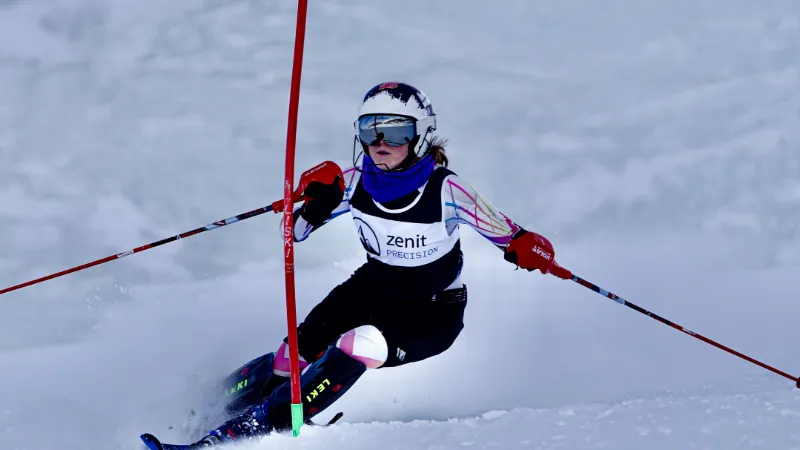
This phase is about translating the physical preparedness achieved off-snow into functional, on-snow movement. It involves re-establishing the connection with the skis and boots, understanding the conditions of the day, and, most importantly, developing a detailed and executable plan for the race course. Many races are won or lost during this phase.
An athlete who uses their free-skiing and inspection time wisely will step into the start gate with confidence and a clear strategy, while one who just goes through the motions will be reacting to the course rather than dictating their line.
Free-skiing with intention
The first few runs of the day, before heading to the race course, are not just for “getting the legs back.” They are a critical opportunity for specific drills and sensory feedback. The goal is to move beyond simply sliding on snow and to actively engage in movements that mirror the demands of the race. This is the time to feel the connection between the feet and the snow, to fine-tune balance, and to rehearse technical cues.
The intensity should be progressive, starting with slow, deliberate movements and gradually building to a pace and intensity that approaches race speed. This allows the body and mind to adapt to the specific snow conditions of the day, which can vary dramatically from firm and icy to soft and granular.
A structured free-skiing warm-up should include various drills. Start with basic balance drills like skiing on one ski or making turns with feet together to activate the small muscles in the feet and ankles. Progress to drills that emphasize key technical elements, such as “hands forward” drills to ensure proper body position or “pole drag” drills to promote a quiet upper body.
It’s also important to incorporate different turn shapes and rhythms, from short, quick slalom-style turns to longer, arcing GS-style turns. This prepares the body for the variety of demands it will face on the course.
A few short, dynamic bursts of speed, like a hockey stop or a quick sprint over a small roller, can also be included towards the end of this session to prime the nervous system for the explosive start. This entire process should be done with a clear mental focus on the sensations of the skis on the snow and the quality of each movement.
The art of course inspection
Course inspection is arguably the most important mental component of the pre-race routine. It is far more than just a brief look at where the gates are. A thorough inspection is an active process of data collection and strategy formation.
The objective is to create a detailed mental map of the course, identifying the optimal line, potential trouble spots, and opportunities to carry speed. An elite racer inspects the course not just with their eyes but with their whole body, imagining the forces and sensations they will experience in each turn. They are analyzing the terrain, the snow conditions, the gate combinations, and the rhythm of the set. This is where the race plan is born.
A systematic approach to inspection is essential. Start by getting a macro view of the entire course from the start or a vantage point, noting the overall flow and rhythm. Then, proceed down the course, stopping to analyze key sections. For each gate combination, consider the entry, the apex of the turn, and the exit.
Where is the fall line? Is the terrain flat, steep, or rolling? Is the snow surface consistent, or are there icy patches? Look for subtleties—a small compression that could be used to generate speed or an off-camber section that will require precise pressure control. It is also valuable to watch other, more experienced racers inspect.
Observe the lines they are considering and listen to the discussions they have with their coaches. During inspection, you are not just memorizing gate locations; you are building a turn-by-turn action plan.
This plan becomes the foundation for the visualization work that follows, transforming a daunting series of gates into a manageable, executable sequence.
Visualization and mental rehearsal
With the data from the course inspection gathered, the next step is to internalize the race plan through visualization. This is a powerful mental technique used by top athletes in all sports to enhance performance. It involves creating a vivid, multi-sensory mental image of a successful race run.
The more detailed and realistic the visualization, the more effective it will be in programming the brain and body for success. This is not daydreaming; it is a focused, deliberate mental practice. It can be done while standing at the top of the course, on the chairlift, or in a quiet space away from the hustle and bustle of the start area.
To practice visualization effectively, close your eyes and begin to run the course in your mind from a first-person perspective. See the color of the gates, the texture of the snow, and the line you intend to ski.
Feel the pressure on the outside ski as you carve a turn, the sensation of acceleration as you come over a roll, and the rhythm of your breathing. Hear the sound of your edges cutting into the snow and the wind rushing past your helmet. Incorporate kinesthetic feelings—the engagement of your core, the flexion in your ankles, and the precise timing of your pole plant.
Run through the entire course multiple times in your mind, flawlessly executing your plan. If you mentally “fall” or make a mistake, stop, rewind, and visualize that section again, this time correctly. This mental rehearsal builds confidence, reduces anxiety, and creates a neural blueprint that your body can follow instinctively when you are actually in the course.
Phase 3: Final activation at the start
The final minutes before you push out of the start gate are the culmination of all the preceding preparation. The atmosphere at the start is often tense and full of distractions. The goal of this final phase is to block out those distractions, bring the body to its peak state of readiness, and sharpen mental focus to a fine point. This is not the time for new thoughts or second-guessing the plan.
It’s about executing a familiar, well-rehearsed routine that brings you to an optimal state of arousal—energized and alert, but not anxious or over-excited. The physical movements are short, explosive, and designed to have a potentiation effect, meaning they enhance the muscles’ ability to produce force.
The mental focus narrows, concentrating only on the immediate task ahead: the first few gates of the course. This is the final check, the last switch to be flipped before performance.
Maintaining temperature and readiness
Standing around in a cold environment can quickly undo all the good work of the earlier warm-up phases. Muscles cool down, reaction times slow, and the body becomes less efficient. Therefore, a primary objective at the start is to maintain core body temperature and keep the muscles warm and pliable. This requires staying active without expending unnecessary energy.
Wearing appropriate layers, such as a warm-up jacket and pants that can be easily removed just before the start, is crucial. These are often provided by teams or federations and are a common sight in the start area of any major race, from a local Swiss Cup event to the Olympics.
In between these periods of rest, it’s important to engage in light, continuous movement. This can include simple actions like walking around, gentle leg swings, or shaking out the arms and legs to keep the blood flowing.
Some athletes use foam rollers or massage sticks on their major muscle groups, like the quads and glutes, to keep them loose. The key is to avoid becoming static.
The body should be kept in a state of simmering readiness, like an engine idling, prepared to rev to its maximum output at an instant’s notice. This constant, low-level activity also helps manage nervous energy, channeling it into productive movement rather than letting it build up as anxiety.
Explosive movements and potentiation
Just before it’s your turn to go, the focus shifts from maintenance to final activation. This involves a short series of explosive, high-intensity movements designed to “wake up” the central nervous system and potentiate the muscles.
This phenomenon, known as post-activation potentiation (PAP), involves performing a near-maximal effort, which then temporarily increases the force-producing capacity of the muscles. In simpler terms, you are tricking your nervous system into recruiting more muscle fibers, making your start more powerful and your initial turns more dynamic.
- Jump squats: Performing 3-5 explosive jump squats is a common and highly effective method. The focus is on minimizing time on the ground and maximizing height, driving through the hips and extending fully. This directly mimics the powerful leg extension required in skiing.
- Lateral jumps: Hopping from side to side, either over a line on the snow or simply back and forth, activates the muscles responsible for lateral stability and movement, which are central to ski racing.
- Reactive starts: Some athletes will practice their start movement, pushing explosively against a fixed object or having a coach provide resistance. This rehearses the specific motor pattern of exiting the gate.
This final burst of activity should be very brief, lasting no more than 30-60 seconds, and should be performed within the last one to two minutes before your start. The goal is to arrive at the gate with your nervous system firing at its peak, feeling powerful, sharp, and ready to attack the course from the very first movement.
Final mental cues and focus
With the body physically primed, the final piece of the puzzle is to lock in the mental focus. The comprehensive visualization of the entire course has already been done. Now, the focus narrows to only the most important elements. This is the time for simple, positive, and actionable self-talk.
Instead of thinking about the entire run, which can be overwhelming, concentrate on one or two key technical cues that you’ve been working on in training. It might be “pressure on the outside ski” or “hands forward.” These simple reminders can anchor your performance and keep your mind from wandering.
The very last thought before pushing out of the gate should be on the first one or two turns. You cannot ski the whole course at once, but you can perfectly execute the start and the first gate. By focusing intensely on this initial section, you set a positive tone for the rest of the run.
A strong, confident start builds momentum, both physically and mentally. Take a few deep, calming breaths to regulate your heart rate and clear your mind. Trust in your training, trust in your plan, and commit fully to the run. At this point, the work is done. It’s time to let your instincts and preparation take over.
Adapting the routine for different disciplines and conditions
A successful pre-race preparation strategy is not a rigid, one-size-fits-all formula. While the core principles of warming the body, activating the nervous system, and preparing the mind remain constant, the specific application must be adapted to the unique demands of each ski racing discipline and the variable conditions of the day.
The physiological and tactical requirements of a short, explosive Slalom run are vastly different from those of a high-speed, endurance-based Downhill. Similarly, preparing for a race on a cold, icy morning in Zermatt requires a different approach than preparing for a race in soft, spring-like conditions.
The hallmark of an experienced and well-coached athlete is the ability to intelligently modify their routine to optimize their readiness for the specific challenge they are about to face.
Slalom vs. Giant Slalom vs. Speed events
The different disciplines in alpine ski racing place unique stresses on the body, and the warm-up must reflect this. Slalom (SL) is a highly anaerobic event characterized by rapid, rhythmic, and explosive changes of direction.
The preparation, therefore, needs to emphasize agility, quickness, and the activation of fast-twitch muscle fibers. The on-snow warm-up for a slalom should include many short-radius turns, quick footwork drills, and perhaps even more explosive plyometric movements like lateral hops at the start to prime the body for rapid side-to-side power application.
Giant Slalom (GS) is often considered the cornerstone of ski racing, blending the technical precision of slalom with higher speeds. The turns are longer, the forces are greater, and the runs are more physically demanding.
The warm-up for GS needs to prepare the body for sustained muscular contractions and higher G-forces. Free-skiing should incorporate larger, more powerful carved turns, and the activation phase might include more focus on core stability and glute strength to handle the increased loads.
In contrast, the speed events, Downhill (DH) and Super-G (SG), introduce the elements of high velocity and terrain absorption. Here, the warm-up must prepare the athlete for maintaining a stable aerodynamic tuck for long periods and for absorbing large compressions.
This means the on-snow preparation should include skiing over varied terrain, practicing tucks, and performing drills that focus on fore-aft balance at speed. The mental preparation also shifts, with a greater emphasis on courage, commitment, and a profound understanding of the high-speed line.
The table below outlines some key differences in preparation for each discipline:
| Discipline | Physical warm-up emphasis | On-snow drill focus | Mental preparation focus |
|---|---|---|---|
| Slalom (SL) | Agility, quickness, anaerobic power, and explosive lateral movements. | Short-radius turns, one-ski skiing, cross-blocking drills, and quick footwork. | Rhythm, aggressive mindset, and focus on a quick and precise start. |
| Giant Slalom (GS) | Muscular endurance, core stability, and power application through longer arcs. | Varied turn shapes, powerful carved turns, and drills for outside ski pressure. | Tactical line choice, maintaining momentum, and linking sections smoothly. |
| Super-G (SG) | Sustained isometric strength (tuck), reactive balance, and terrain absorption. | High-speed carving, skiing over rollers and compressions, and finding the aerodynamic position. | Inspection memory, commitment to the line, and adapting to terrain at speed. |
| Downhill (DH) | Full-body endurance, eccentric leg strength for landings, and high-level stability. | Gliding on flats, pre-jumping terrain, and maintaining composure at maximum velocity. | Course memorization over multiple days, managing fear, and intense focus on key sections. |
Adjusting for weather and snow conditions
The environment is an ever-present variable in ski racing. An athlete’s preparation must be fluid enough to account for changes in temperature, precipitation, and snow surface. On a bitterly cold day, for instance, the priority is to generate and conserve heat. The off-snow warm-up might need to be longer or slightly more intense to raise the core temperature sufficiently.
At the start, it becomes even more critical to stay layered and keep moving to prevent muscles from cooling down. Conversely, on a warm, sunny spring day, the challenge is to warm up effectively without overheating or becoming dehydrated. The warm-up might be shorter, and hydration becomes a more significant factor.
Snow conditions also dictate adjustments. On hard, icy surfaces, the skis will react instantly and aggressively. The on-snow warm-up should focus on precise edge control, balance, and quick reactions. Drills that emphasize clean carving and a stable platform are beneficial.
In soft, new snow, the skis will feel slower and require more active input from the athlete. The warm-up should then focus on generating speed, staying forward, and making more rounded, powerful turns to avoid getting bogged down. If it’s foggy or snowing, visibility is reduced.
This adds a significant mental challenge. Course inspection becomes even more detailed, and visualization is used to build confidence in a line that may be difficult to see. The athlete must trust their inspection and their feeling for the terrain, rather than relying solely on visual cues.
Acknowledging these variables and making small, intelligent adjustments to the standard routine is a sign of a mature and adaptable competitor. Our team at Ski Zenit works closely with athletes to develop this adaptability, ensuring they are prepared for any challenge the mountain presents.
Are you ready to refine every aspect of your competitive performance, from your pre-race activation to your line through the finish? A structured, professional training environment is the catalyst for reaching your potential.
Join one of our competitive skiing programs to perfect your technique, analyze your gate strategy, or attend a camp for immersive training and expert guidance on the equipment that will help you gain those crucial hundredths of a second. Let’s build your pathway to the podium together.