
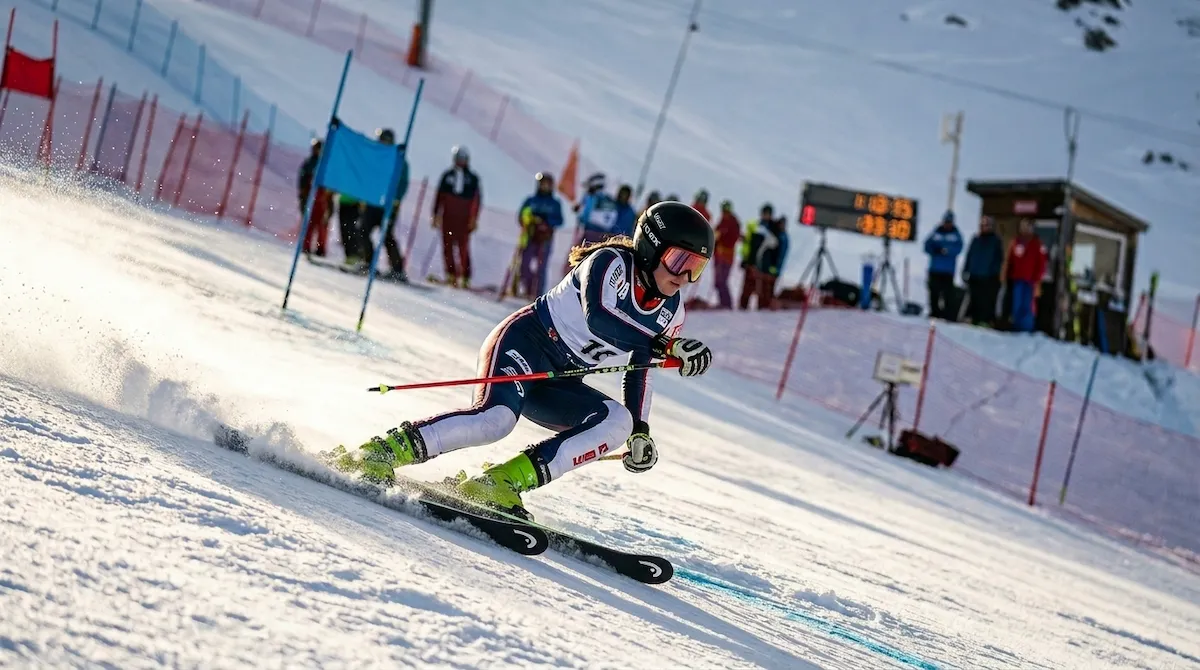
The move from junior-level racing to the international FIS circuit represents one of the most significant moments in a ski racer’s career. It’s a jump from a familiar, often regional, environment to a global stage where every athlete is serious, talented, and driven. This isn’t just about skiing faster; it’s a complete evolution of the athlete.
It demands a higher level of physical conditioning, technical precision, mental fortitude, and logistical planning. For many young racers, this period is filled with excitement, uncertainty, and a steep learning curve.
The rules change, the competition intensifies, and the demands on your time, body, and mind multiply exponentially. Success at this stage is not accidental. It is the result of deliberate, structured, and intelligent preparation.
Understanding the new landscape—from the intricacies of the point system to the physical requirements of longer, more demanding courses—is the first step toward not just participating, but truly competing.
This journey requires a holistic approach, where off-snow training is as critical as on-snow performance, and where mental resilience can be the deciding factor between a good run and a great result. It’s a professionalization of your passion, a commitment to excellence in every facet of the sport.
The foundation you build during this critical phase will define your trajectory for years to come, setting the stage for potential success on the Europa Cup and World Cup circuits. It is a challenge, but with the right guidance and a clear understanding of what lies ahead, it is an incredibly rewarding one.
Content
Understanding the FIS landscape: More than just faster skiing
Entering the world of FIS (Fédération Internationale de Ski) racing is like graduating from a local league to a professional one. The entire structure of competition changes. You are no longer just competing against peers from your region or country; you are now ranked against thousands of athletes from around the globe. This shift requires a new perspective on what it means to be a competitive athlete.
The focus moves from winning individual races in a small pond to strategically building a global ranking. Every decision, from which races to enter to how you manage your travel, has a direct impact on your career progression. The autonomy and responsibility placed on the athlete increase dramatically.
You are now the CEO of your own skiing career, and understanding the operational side of the sport becomes just as important as your ability to arc a clean turn. This new environment is governed by a complex set of rules, calendars, and ranking systems that can be intimidating for newcomers.
Taking the time to learn this landscape is not just helpful; it is essential for survival and success. It allows you to set realistic goals, make informed decisions, and navigate your first few seasons with confidence rather than confusion.
The fundamental shift: From age groups to a global ranking
In junior racing, your world is often defined by age categories like U14 or U16. Your primary competitors are athletes you’ve likely known and raced against for years. Success is measured in podiums at regional championships or national junior events. The transition from junior to FIS racing marks a profound change in this dynamic.
Suddenly, age categories become less relevant, and you are thrown into an open field. A 16-year-old rookie can find themselves in the same start list as a 28-year-old national team veteran. The single most important metric becomes your FIS points, which create a global ranking across all ages.This system is the backbone of the sport at the elite level.
Your points determine your start number (bib number), which has a significant impact on your chances of success, especially in technical events where course conditions deteriorate with each racer. A lower start number means you get to ski on a cleaner, less rutted course.
Therefore, the goal of every race is not just to be fast on that day, but to ski well enough to lower your points, which in turn improves your start position for future races. This creates a self-perpetuating cycle: good results lead to better start numbers, which lead to more opportunities for good results.
This global ranking system also means that your competition is no longer just local. You will be traveling to different countries, experiencing different cultures, and competing against athletes with diverse styles and backgrounds.
This exposure is one of the most enriching aspects of the sport, but it also adds layers of complexity related to travel, logistics, and adapting to unfamiliar environments. The mindset must shift from short-term, local victories to a long-term, strategic plan for international progression.
Demystifying the FIS point system
The FIS point system can seem opaque at first, but its basic principles are straightforward. It is a merit-based system designed to rank every active ski racer in the world. A lower point score is better, with the world’s top racers having zero points. When you start, you will have 999.99 points in each discipline. Your goal is to lower that number as quickly as possible.
Points are calculated based on your performance relative to the best racers in any given race. Every race has a “penalty,” which is calculated based on the quality of the top-seeded racers competing. A race with several World Cup athletes will have a very low penalty, while a lower-level race with less experienced competitors will have a higher penalty.
Your race result is a combination of this race penalty and your individual performance, calculated based on your time difference from the winner. For example, if you win a race, you receive the race penalty as your result. If you finish behind the winner, a value is added to the penalty based on your time back. Your overall FIS points in a discipline are the average of your two best results.
This is a crucial detail. It means that one or two excellent races can dramatically improve your ranking and your start numbers for the entire season. This is why understanding the FIS points requirements is so important for strategic planning. It’s not just about entering every race possible.
It’s about targeting specific races where you have a good chance of scoring a strong result. This might mean entering a lower-level race (often called an ENL or CIT race) where the penalty is manageable and you have a realistic shot at a top finish.
As your points improve, you gain access to higher-level competitions, such as National Championships (NC), FIS races with stronger fields, and eventually, the Continental Cups (like the Europa Cup or Nor-Am Cup), which are the direct stepping stone to the World Cup.
Navigating the international race calendar for the first time
The sheer volume and geographic spread of races on the FIS calendar can be overwhelming. Unlike the structured, predictable schedule of a junior program, the FIS calendar offers a vast menu of options across Europe, North America, and even the Southern Hemisphere for year-round competition.
An effective strategy for navigating the international race calendar is critical. For a first-year FIS athlete, the focus should be on gaining experience and lowering points. This often means staying closer to your training base and focusing on a high volume of entry-level races. The goal is to get comfortable with the format, the travel, and the pressure of the FIS environment.
A typical first-year schedule might involve a block of training followed by a block of 3-4 races in a nearby region. This minimizes exhausting travel and maximizes time on snow. As an athlete progresses, the strategy evolves. You might start traveling further for races with a lower penalty, even if it means more time on the road.
This is a calculated risk; a good result can significantly lower your points, but a poor result means you’ve invested significant time and money for little return. This is where a knowledgeable coach or program becomes invaluable.
They can help you analyze the calendar, identify the right races for your skill level and goals, and create a balanced schedule that integrates training, competition, and rest. It is a common mistake for new FIS athletes to over-race.
They see the vast calendar and feel they need to be competing every weekend. This can lead to burnout, fatigue, and poor performance. A well-structured season plan will prioritize quality over quantity, ensuring you arrive at each race sharp, rested, and ready to perform at your best. The plan should also be flexible, allowing for adjustments based on performance, weather, or fatigue.
The physical evolution: Building an elite athlete’s body
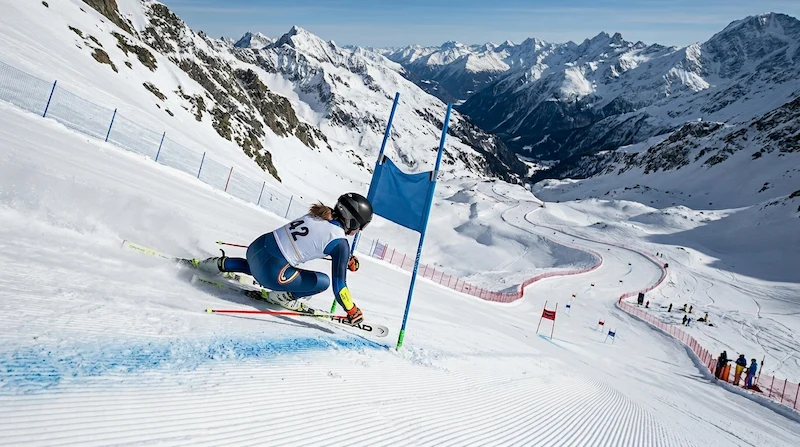
The physical demands of FIS-level racing are a significant step up from the junior ranks. The courses are longer, the speeds are higher, and the forces exerted on the body are greater. A typical Giant Slalom course at the FIS level can have 50 or more gates and a vertical drop of over 300 meters, requiring sustained, high-intensity effort for well over a minute.
To handle these demands and remain competitive and injury-free, an athlete’s physical preparation must be comprehensive and year-round. The days of simply skiing to get in shape are long gone. Elite ski racers are powerful, agile, and incredibly durable athletes who spend as much time in the gym as they do on the slopes.
This commitment to physical conditioning is non-negotiable. It is the engine that powers technical skill. You can have the best technique in the world, but if you don’t have the strength to hold a clean arc through a compression or the endurance to maintain your form at the bottom of the course, your technique will break down.
This is why senior ski racing preparation begins months before the first snowflake falls. It’s a structured, scientific approach to building a body that can withstand the rigors of a long, demanding season.
Off-season conditioning: The foundation of on-snow success
The off-season, or “dryland” period, is where the foundation for the entire winter is built. This is typically from May to September for Northern Hemisphere athletes. It’s a time to address weaknesses, build a powerful base of strength and endurance, and improve overall athleticism. A well-designed off-season program is not random; it is periodized, meaning it is broken down into specific phases, each with a different focus.
- Phase 1: General physical preparedness (GPP) and recovery. Immediately after the season, there is a short period of active recovery to allow the body and mind to heal. This is followed by a GPP phase, which focuses on re-establishing a broad base of fitness. This includes activities like hiking, swimming, and light strength training to improve work capacity and correct any muscular imbalances that developed during the season.
- Phase 2: Strength and hypertrophy. This is the primary muscle-building phase. The focus is on compound movements that build functional strength relevant to skiing. Key exercises include squats, deadlifts, lunges, pull-ups, and overhead presses. The goal is to increase the size and strength of the major muscle groups, particularly in the legs, hips, and core, which are the primary movers in skiing.
- Phase 3: Power and speed. Once a solid strength base is established, the focus shifts to converting that strength into explosive power. This is the ability to generate force quickly, which is essential for dynamic, athletic skiing. This phase incorporates plyometric exercises like box jumps, broad jumps, and medicine ball throws. It also includes Olympic lifts like the clean and jerk or snatch, which teach the body to move heavy loads with speed and coordination.
- Phase 4: Sport-specific endurance and pre-season taper. As the on-snow season approaches, the training becomes more specific. This involves metabolic conditioning circuits that mimic the work-to-rest ratios of a ski run. For example, an athlete might perform a series of high-intensity exercises for 60-90 seconds, followed by a few minutes of rest, repeated multiple times. The final weeks before heading to the glaciers for fall training involve a taper, where the volume of training is reduced to allow the body to fully recover and adapt, ensuring the athlete arrives on snow feeling fresh and strong.
In-season strength and recovery: A year-round commitment
The work in the gym does not stop when the race season begins. The goal of in-season training shifts from building new strength to maintaining the strength and power developed during the off-season.
A long, grueling season of travel and racing can be catabolic, meaning the body can start to break down muscle tissue if it’s not supported by proper training and nutrition. In-season strength sessions are typically shorter, less frequent, and lower in volume than off-season workouts.
The focus is on high-intensity, low-repetition movements to maintain neuromuscular activation and power without causing excessive fatigue that could interfere with on-snow performance. A typical in-season week might include two full-body strength sessions. Equally important is a dedicated recovery protocol.
The ability to recover quickly between training sessions and races is what separates good athletes from great ones. This includes a range of modalities. A proper cool-down after every on-snow session is the first step, helping to clear metabolic waste from the muscles.
Stretching and foam rolling are essential for maintaining flexibility and releasing muscle tightness. Other recovery tools might include ice baths, compression garments, and massage. Sleep is perhaps the most critical and often overlooked component of recovery.
During deep sleep, the body releases growth hormone, which is vital for muscle repair and adaptation. Consistently getting 8-10 hours of quality sleep per night is one of the most effective performance enhancers available to an athlete.
Nutrition and hydration: Fueling for peak performance
You cannot out-train a bad diet. Nutrition is the fuel that powers the athletic engine, and at the FIS level, it needs to be treated with the same seriousness as technical training.
An athlete’s diet must be structured to support heavy training loads, promote recovery, and maintain a lean, powerful physique. The energy demands of a ski racer are enormous. A day of training or racing can burn thousands of calories. It is crucial to consume enough high-quality calories to meet these demands.
Chronic under-fueling can lead to fatigue, loss of muscle mass, a weakened immune system, and an increased risk of injury. The diet should be well-balanced across the three macronutrients. Carbohydrates are the primary fuel source for high-intensity exercise and should make up the bulk of the diet, especially around training times. Good sources include whole grains, fruits, and vegetables. Protein is essential for muscle repair and growth.
Athletes should aim to consume a source of protein with every meal, such as lean meats, fish, eggs, or legumes. Healthy fats are important for hormone function and overall health. Sources like avocados, nuts, seeds, and olive oil should be included in the diet. Nutrient timing is also a key concept.
Consuming a meal or snack rich in carbohydrates and protein within 30-60 minutes after a training session can significantly enhance muscle glycogen replenishment and protein synthesis, accelerating the recovery process. Hydration is another critical piece of the puzzle. Even mild dehydration can lead to a significant decrease in performance, concentration, and coordination.
Athletes should be sipping water throughout the day and should use electrolyte drinks during intense or prolonged training sessions to replace the fluids and minerals lost through sweat. A disciplined approach to nutrition and hydration is a hallmark of a professional athlete and a key component of making a successful leap to the next level.
Technical and tactical mastery on the course
While physical conditioning provides the raw power, it is the refinement of technique and tactical intelligence that allows an athlete to apply that power effectively on a race course. The step up to FIS racing exposes athletes to a new level of challenge in this domain. The courses are set on steeper, more challenging terrain.
The snow conditions are often more varied and difficult, frequently injected with water to create a hard, icy surface that can withstand many racers. The gates are set further apart, demanding longer, more powerful turns and higher speeds. Simply being a “good skier” is no longer enough.
Success requires a deep, nuanced understanding of the physics of a ski turn and the strategic thinking of a chess player. Every run is a puzzle, and the best racers are the ones who can solve it the fastest.
This involves a continuous process of refinement, analysis, and adaptation, guided by experienced coaches who can identify the small details that make a big difference. This pursuit of technical and tactical perfection is a never-ending journey, but it is one that defines the essence of elite ski racing.
Refining your technique for longer, tougher courses
The technique that brought success in U16 racing often needs to be evolved to handle the demands of FIS courses. The primary difference is the need to manage significantly higher speeds and greater forces. At the junior level, athletes can often get away with minor technical flaws, muscling their way through a course.
At the FIS level, these inefficiencies are exposed and magnified. Any imbalance or unnecessary movement gets amplified at speed, leading to a loss of time and control. One of the key areas of focus is the transition between turns. A smooth, efficient transition allows the skier to carry momentum from one turn into the next, creating a fluid, linked series of arcs.
This requires precise timing and a quiet upper body, allowing the legs and skis to do the work underneath. Another critical element is pressure control. On the icy surfaces common in FIS racing, the ability to apply and release pressure on the edge of the ski with precision is paramount.
Too much pressure too quickly can cause the edge to break away; too little pressure and the ski will not hold its arc. Athletes must learn to feel the ski and the snow, constantly adjusting the pressure to maintain optimal grip and acceleration out of the turn.
This is particularly important when navigating compressions, rolls, and changes in pitch, where the forces on the body can triple. A strong, athletic stance with ankles, knees, and hips flexed allows the body to act as a shock absorber, maintaining ski-to-snow contact and control through these challenging sections. The ultimate goal is to develop a versatile technique that can be adapted to any condition, any terrain, and any course set.
Gate strategy and line selection at the course inspection
A ski race is often won or lost before the athlete even leaves the starting gate. The course inspection is a critical part of the race-day routine and a key differentiator between experienced and novice racers. It is not simply a matter of memorizing the sequence of gates.
A thorough inspection involves developing a detailed plan, or “line,” for the entire course. This line represents the fastest and most efficient path from start to finish. Choosing the optimal line involves a series of complex calculations.
A “high line” involves starting the turn earlier and higher above the gate. This generally creates a rounder, smoother arc, which helps maintain speed but covers more distance. A “straight line” or “direct line” involves a later turn entry, aiming to travel the shortest possible distance between gates.
This is faster in theory but is also higher risk, as it leaves less room for error and requires more aggressive pressure control to complete the turn before the next gate. The best racers blend these concepts, choosing a high line in sections where they need to carry speed and a more direct line in rhythmic sections to gain time.
During inspection, athletes must also analyze the terrain, identifying subtle rolls, compressions, or sidehills that will affect their balance and ski pressure. They need to assess the snow conditions, looking for icy patches or softer spots.
They must also consider the course set itself—the distance between gates and the offset from one to the next. A good inspection results in a clear mental map of the course and a detailed plan for every single turn.
This allows the athlete to ski proactively, anticipating the next gate, rather than reactively, just trying to survive from one gate to the next. This level of tactical planning is a skill that is developed over time through experience and with the guidance of a coach who can help interpret the course and formulate a winning strategy.
The crucial role of video analysis and data
In modern ski racing, feeling is no longer enough. What feels fast might not actually be fast. This is where objective feedback from video analysis and timing data becomes an indispensable tool for development. Recording training and race runs and reviewing them with a coach provides a level of insight that is impossible to achieve through on-hill feedback alone. Video allows for a frame-by-frame breakdown of technique.
Coaches can use slow-motion and drawing tools to highlight subtle issues in body position, timing, or line choice. Is the athlete’s inside hand dropping in the turn? Is the pressure applied too late in the arc? Are they skiing a “clean” arc, or is there a slight skid that is scrubbing speed? Seeing these issues on video provides undeniable, objective proof and helps the athlete connect the coach’s feedback with the actual physical movement.
A powerful technique is to use split-screen analysis, comparing an athlete’s run side-by-side with that of a teammate or even a World Cup star. This makes it easy to see the differences in line, body position, and timing that separate good skiing from great skiing. Beyond simple video, data is playing an increasingly important role.
Timing splits taken at various sections of a training course can pinpoint exactly where an athlete is gaining or losing time. This allows for highly targeted feedback. Instead of just saying “you need to be faster on the bottom part,” a coach can say “you are losing three-tenths of a second in the two gates leading into the final flush.”
This specific, data-driven feedback allows the athlete and coach to focus their efforts on the areas that will yield the biggest improvements. This analytical approach, combining the coach’s eye with objective data, accelerates the learning process and is a cornerstone of elite training programs like Ski Zenit.
The mental game and equipment puzzle
The final pieces of the puzzle in the journey to becoming an elite FIS racer lie in the mind and in the meticulous preparation of equipment. These two areas are often what separate athletes of similar physical and technical ability. The mental resilience to perform under pressure, bounce back from setbacks, and maintain focus over a long season is a skill that must be trained just like any physical attribute.
Similarly, the difference between winning and losing can come down to hundredths of a second, and that small margin can often be found in the perfect ski setup or a flawless wax job.
Mastering these elements is a sign of a mature, professional athlete who understands that success in ski racing is a game of inches, where every detail matters. The transition from junior to FIS racing is as much a mental and logistical challenge as it is a physical one, and addressing these components head-on is crucial for long-term success.
Developing resilience, focus, and a professional mindset
The mental side of ski racing at the FIS level is a formidable challenge. The pressure is higher, the stakes are greater, and the potential for disappointment is ever-present. A single mistake, a hook of an edge, can result in a DNF (Did Not Finish), turning a potentially great day into a zero-point result. The ability to handle this pressure and bounce back from these inevitable setbacks is what defines a mentally tough competitor.
Resilience is the cornerstone. It’s the ability to have a bad run, analyze it without dwelling on it, and then completely reset your focus for the second run or the next day’s race. Athletes who let one mistake derail their entire race weekend will struggle to find consistency.
Developing this resilience involves building routines, practicing mindfulness, and working with coaches or sports psychologists to develop coping strategies. Focus is another critical mental skill. From the moment you begin your warm-up to the second you cross the finish line, maintaining a high level of concentration is essential.
This means blocking out distractions, whether it’s the crowd, the weather, or the performance of other racers. Pre-race routines are a powerful tool for honing this focus. By following the same sequence of actions before every race—the same warm-up, the same inspection process, and the same mental cues in the start gate—an athlete can create a “performance bubble” that helps them enter an optimal state of focus and readiness.
Finally, adopting a professional mindset is key. This means taking ownership of your career. It means being punctual, communicating effectively with your coaches, taking care of your body, and treating every training session with the same intensity as a race. It’s a shift from being a kid who skis to being an athlete whose profession is skiing.
Equipment selection and tuning: The one-percent difference
At the elite level, equipment is not just a tool; it is a finely tuned extension of the athlete. The difference between a good day and a great day can often be traced back to the preparation of the skis. FIS regulations dictate specific ski lengths and sidecut radii for each discipline, which are generally longer and less shapely than junior skis.
This requires the athlete to generate more of the turn shape themselves, placing a greater emphasis on technique. The process of selecting the right equipment is highly individualized. An athlete might test dozens of pairs of skis from different brands to find the model and stiffness that best suit their weight, strength, and skiing style. Boot fitting is arguably the most critical component.
A well-fitted boot provides the direct connection between the athlete’s foot and the ski, allowing for precise control. Any slop or pressure point in the boot will compromise performance. Most elite racers have custom-molded liners and footbeds to ensure a perfect fit. Once the equipment is selected, the daily work of tuning begins.
This is a science in itself. The base structure of the ski must be ground to match the prevailing snow conditions. The edges must be sharpened to precise angles—often with different angles for the base edge and the side edge—to provide the optimal balance of grip and smoothness. Waxing is a complex art, with a vast array of waxes designed for different snow temperatures and humidity levels.
A professional-level tune can take hours of meticulous work, but it is this attention to detail that can provide the hundredth of a second needed to move up the results sheet. Many athletes learn to do this work themselves, as it fosters a deeper connection with their equipment and a better understanding of how it performs.
Building your support team: Coaches, parents, and mentors
No athlete makes it to the top alone. Success in ski racing is the product of a strong support team. At the center of this team is the coach. A good coach is more than just a technical instructor. They are a mentor, a strategist, a motivator, and a manager. They help the athlete set goals, design a training plan, analyze video, and navigate the complexities of the race calendar.
The relationship between an athlete and their coach is one of the most important in their career, built on trust, respect, and open communication. The role of parents also evolves during this transition.
While they were often the primary managers and organizers in the junior years, their role at the FIS level often shifts to one of emotional and financial support. It’s important for parents to step back and allow the athlete and coach to take the lead on the technical and strategic aspects of the sport. This fosters the independence and ownership that the athlete needs to develop. Mentors can also play a valuable role.
These might be older, more experienced athletes, former racers, or other figures in the ski community. They can provide a unique perspective, offer advice based on their own experiences, and serve as a sounding board for the challenges and frustrations that are an inherent part of the journey.
Building this network of support creates an environment where the athlete feels empowered and understood, allowing them to focus on the immense task of becoming the best ski racer they can be. This is the environment we strive to create within our programs.