
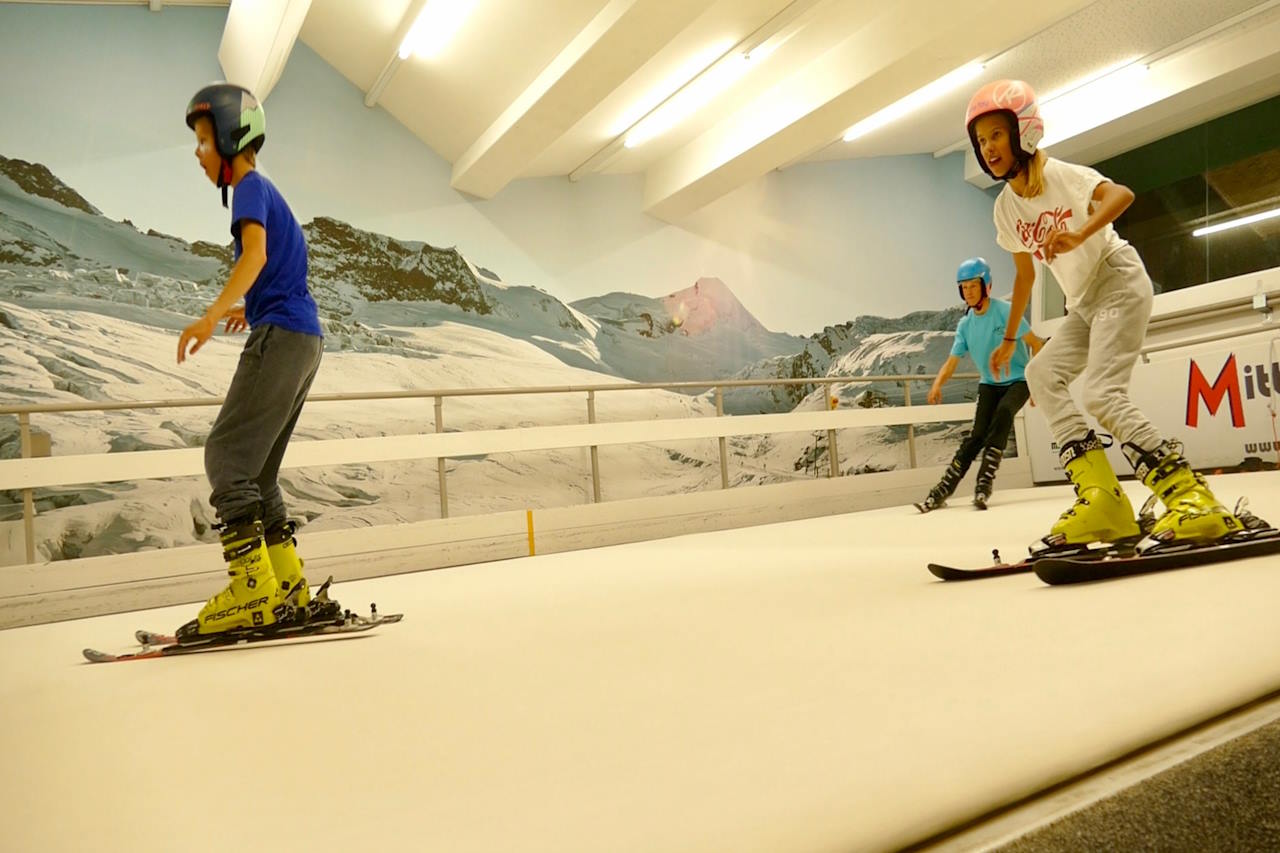
Most people standing at the bottom of a snow-covered mountain for the first time ask the same question: how long will it be until I can actually enjoy this? The answer varies depending on your goals, but for most beginners, getting comfortable on the snow takes less time than you might expect. Usually, within three to five days of consistent practice, you can move from walking awkwardly in boots to sliding down beginner slopes with a smile on your face.
Skiing is a sport where the initial learning curve is steep but rewarding. You spend the first few hours understanding how to put on your equipment and how to stand without sliding backward.
Once you find your balance, the focus shifts to controlling your speed. This is the stage where you learn the “wedge” or “pizza” shape with your skis. It is the foundation of everything else you will do on the mountain. As you get better at this, you start to feel the thrill of the sport, and that is when the real fun begins.
As you might have noticed, the environment plays a big role in how fast you progress. Learning on the groomed, wide-open runs of a place like Saas-Fee or Zermatt provides a different experience than a small local hill.
The quality of the snow and the consistency of the terrain allow you to focus on your body position rather than worrying about icy patches or rocks. This consistency helps build muscle memory faster, which is the secret to becoming a proficient skier in a shorter timeframe.
The first three days of your skiing journey
The first day is often the most physically demanding. You are using muscles in your legs and core that you might not use in your daily life. You spend a lot of time learning how to stop, which is the most important skill for any beginner. By the end of day one, you should be able to slide a few yards and come to a controlled halt. It might feel slow, but this is a major milestone in your progression.
On the second day, you usually start making your first turns. Turning is how you control your path and manage your speed on steeper sections. Instead of just going straight and stopping, you begin to move across the hill in a zigzag pattern.
This reduces the physical strain on your legs because you aren’t fighting gravity the whole time. By the third day, many learners feel confident enough to take a chairlift to a slightly higher point on the mountain to try a “green” or very easy “blue” run.
It is helpful to look at the typical progression in a structured way. Everyone learns at a different pace, but this table shows what a standard timeline looks like for a healthy adult or teenager taking professional lessons.
| Day | Typical skills learned | Expected terrain |
|---|---|---|
| Day 1 | Equipment handling, basic balance, the wedge stop | Flat nursery area |
| Day 2 | Wedge turns, basic speed control, using a magic carpet lift | Very gentle slopes |
| Day 3 | Linking turns, riding a chairlift, improved balance | Green runs (Beginner) |
| Day 4-5 | Beginning to bring skis parallel, traversing slopes | Easy Blue runs (Intermediate) |
| Week 2 | Consistent parallel turns, handling different snow types | Varied Blue runs |
As we saw, those first few days are about building a foundation. If you try to rush into steep terrain before you can stop reliably, you might develop bad habits or lose your confidence. Taking it slow at the start actually makes you a better skier in the long run.
Factors that influence how fast you learn
Your previous experience with other sports can change the timeline significantly. If you have spent time ice skating or rollerblading, you already understand how to use the edges of a blade to move and stop. This translates very well to skiing. Similarly, athletes who have strong core stability from sports like gymnastics or surfing often find their balance much quicker than those who don’t exercise regularly.
Physical fitness is another big factor. Skiing requires a lot of “eccentric” muscle strength, which means your muscles are working while they are lengthening—like when you are lowering yourself into a squat.
If your legs are strong, you won’t get tired as quickly, which means you can spend more hours on the snow each day. More time on the snow directly leads to faster improvement. However, even if you aren’t a pro athlete, you can still learn; it just might take a few extra breaks throughout the day.
The quality of your instruction is perhaps the most important variable. While it is tempting to have a friend teach you, professional coaches know how to spot small technical errors that a friend might miss.
A coach can tell if your weight is too far back or if your boots are too loose, both of which can stall your progress for days. In places like Switzerland, instructors are trained to help you move through the levels efficiently, ensuring you stay safe while you push your limits.
When can children start learning to ski
Kids are like sponges when it comes to physical skills. They often have a lower center of gravity and less fear than adults, which helps them pick up the basics very quickly.
Many parents wonder when the right time is to move from just playing in the snow to actual training. We can look at how long it takes to learn and when they might be able to start competing to get a better idea of the timeline.
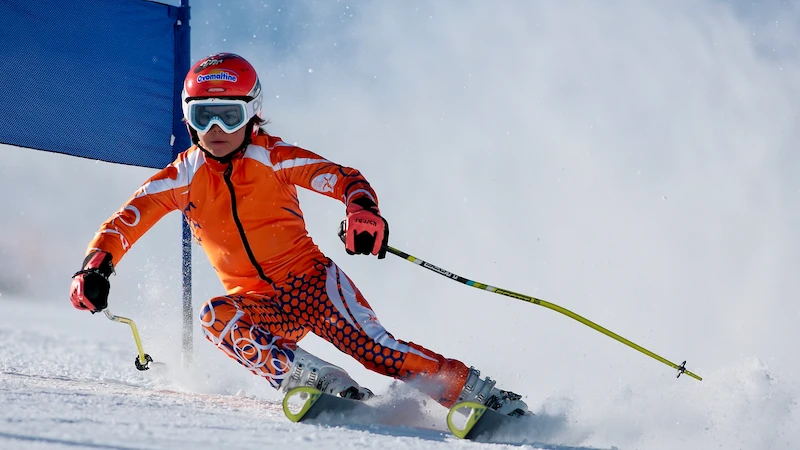
Children as young as 6 begin to train a little in slalom and giant slalom, which serves as an introduction to competitive skiing once they’ve mastered the basics of alpine skiing.
They still do a lot of recreational skiing and very little specific training, but they can get started. At this age, the focus is on “mileage”—simply spending as much time as possible on their skis in all kinds of conditions. This builds a natural feel for the snow that is very hard to replicate if you start as an adult.
For younger children, say ages 3 to 5, the goal is usually just to get them comfortable in the gear. They might spend an hour or two on the snow and then go play. But by age 6, their coordination has developed enough that they can start understanding more complex movements. This is a great window to introduce them to a more structured environment, like a ski camp, where they can be around other kids who are also learning.
Transitioning from beginner to intermediate
Once you can get down a blue run without falling and you are starting to keep your skis parallel, you have reached the intermediate stage. This is where the sport becomes truly addictive. You are no longer just surviving the mountain; you are starting to play with it. You can look at the view, choose different paths, and even handle some small bumps in the snow.
To move past this stage, you need to start focusing on your “edge work.” Instead of sliding your skis around a turn, you start to use the metal edges to “carve” into the snow. This gives you much more control and allows you to go faster safely.
Many people stay at the intermediate level for years, but if you want to reach the next level, you might want to look into specialized clinics or camps that focus on technique.
In this phase, you also start to learn about different types of snow. Fresh powder feels very different from the hard-packed snow you find in the morning. Learning how to adjust your balance for these different conditions is part of the intermediate journey. It takes time, usually several weeks of skiing over a couple of seasons, to feel truly “intermediate” in all conditions.
Moving into competitive skiing and race technique
For some, just riding the lifts and enjoying the scenery isn’t enough. They want to see how fast they can go or how precisely they can turn. This is the world of competitive skiing. Transitioning from a recreational skier to a racer requires a shift in mindset and a lot of specific training. You aren’t just skiing the mountain anymore; you are skiing a specific line through gates.
Race technique is all about efficiency. Every movement you make should help you maintain or increase your speed. You learn how to stay “quiet” in your upper body while your legs do all the work. You also start to learn about “line choice,” which is the path you take through the gates. The shortest path isn’t always the fastest; sometimes you need to take a wider line to carry more speed into the next section.
This level of skiing also requires a deeper understanding of equipment. The skis used for slalom are different from those used for giant slalom or Super-G. They have different lengths, different turn radii, and different stiffness levels. Professional advice on equipment becomes very important here, as the wrong pair of skis can actually hold back your performance even if your technique is perfect.
The role of year-round training
If you are serious about improving, you don’t have to wait for winter. One of the best ways to shorten the time it takes to learn advanced skills is to train on glaciers during the summer and autumn. Places like Zermatt and Saas-Fee in Switzerland offer incredible glacier skiing throughout the year. The snow on a glacier in July is often very firm in the morning, which is perfect for practicing race techniques and high-speed carving.
Training in the off-season helps you maintain your muscle memory. Most recreational skiers take a six-month break between seasons and spend the first few days of every winter just trying to remember how to ski. By training year-round, you start every winter exactly where you left off, or even better. This is how elite athletes and dedicated masters skiers stay at the top of their game.
Year-round programs often include “dryland” training as well. This involves gym work, balance exercises, and even mountain biking or hiking to keep your legs strong. When you combine this physical preparation with time on the snow, your progress accelerates significantly. You might find that a single week of intensive summer training on a glacier is worth three weeks of casual winter skiing.
Equipment and its impact on your learning speed
Many beginners make the mistake of using old, hand-me-down equipment that doesn’t fit properly. If your boots are too big, your feet will slide around inside them. This means when you move your legs to turn, the skis don’t react immediately. You end up working twice as hard for half the result. Getting a pair of boots that are professionally fitted is the single best investment you can make to speed up your learning process.
The length and type of your skis also matter. Shorter skis are easier to turn and are great for beginners. As you get faster and start skiing steeper slopes, you will want longer skis that offer more stability. Modern “rocker” technology has also made skiing much easier than it was twenty years ago. These skis are shaped in a way that helps them initiate turns more naturally, which can shave days off the time it takes to learn parallel turns.
Safety gear is another part of the equation. Wearing a helmet and proper padding can give you the confidence to try new things. When you aren’t afraid of a small tumble, you are more likely to push your boundaries and learn faster. It’s all about creating an environment where you feel safe to experiment with your balance and technique.
Understanding the Swiss elite training approach
Switzerland has a long history of producing some of the world’s best skiers. This isn’t just because they have big mountains; it’s because they have a very structured approach to training. The Swiss system emphasizes technical precision from a very young age. Even if you are an adult learner, you can benefit from this elite approach by focusing on the small details of your stance and your weight distribution.
In a professional training environment, you often use video analysis. Seeing yourself on screen allows you to understand what your coach is talking about. You might think you are leaning forward, but the video shows you are actually sitting back. This visual feedback is a powerful tool that can help you fix technical errors in a single afternoon that might otherwise take weeks to realize on your own.
This elite training isn’t just for professionals. Private athletes of all ages can access these methods to improve their skiing. Whether you are a teenager looking to enter your first race or an adult master wanting to perfect your Super-G turns, using the same techniques as the pros will help you reach your goals much faster. It’s about working smarter, not just harder.
| Training type | Focus area | Best for |
|---|---|---|
| Private coaching | Individual technical flaws | Rapid progression for all levels |
| Race camps | Gate technique and speed | Aspiring competitors and advanced skiers |
| Glacier camps | Consistency and muscle memory | Year-round athletes and professionals |
| Adult masters training | Refining technique for older skiers | Experienced skiers looking for a challenge |
As you can see from the table, there are different paths depending on what you want to achieve. A casual holiday skier might just need a few private lessons, while someone looking to join the competitive world will benefit more from a structured camp environment.
The mental side of learning to ski
Skiing is as much a mental game as it is a physical one. Fear is the biggest hurdle for most beginners. The sensation of sliding on a slippery surface is counterintuitive to our natural instincts. Our brain wants us to lean back away from the slope, but to control the skis, we actually need to lean forward and “engage” with the mountain. Overcoming this mental block is usually the “aha!” moment for most learners.
Building confidence comes from small wins. Every time you get down a hill without falling, your brain registers that it is safe. This is why a good instructor will never take you on a slope that is too hard for you.
They want to keep you in the “growth zone”—where you are challenged but not overwhelmed. If you get too scared, your muscles tense up, and it becomes impossible to ski with good technique.
Visualizing your turns can also help. Before you start a run, take a second to look at the path you want to take. See yourself making smooth, controlled turns. This mental rehearsal prepares your nervous system for the movements you are about to make. It sounds simple, but many professional racers use this exact technique before they drop into a World Cup course.
How to maintain your skills between trips
If you only ski once a year, you will likely spend the first two days of every trip just getting your “ski legs” back. To avoid this, you can do things at home to stay prepared. Balance boards are a great way to keep your stabilizer muscles active. Squats and lunges will keep your quads and glutes ready for the workload of the mountains.
Another great option is visiting an indoor ski slope or a dry slope if you have one nearby. While it’s not the same as being in the Swiss Alps, it allows you to keep the feeling of the skis under your feet. Even a few hours of sliding every month can make a massive difference in how long it takes to learn more advanced skills when you finally get back to the real snow.
Staying flexible is also important. Skiing requires a good range of motion in your hips and ankles. Incorporating some basic stretching or yoga into your routine will help you stay agile on the snow and reduce the risk of injury. The more prepared your body is, the more you can focus on the technical side of the sport when you are actually on the mountain.
Taking the next step in your training
As you have seen throughout this article, the time it takes to learn skiing depends on your dedication, the quality of your coaching, and your willingness to push yourself. Whether you are just starting out or you are looking to shave seconds off your race times, there is always a way to improve. The journey from those first shaky steps in the nursery area to carving down a glacier at high speed is one of the most rewarding experiences you can have.
Focusing on the right techniques early on saves you from having to unlearn bad habits later. This is true for children starting at age 6 and for adults who are looking to refine their skills. By choosing a structured environment and professional guidance, you ensure that every hour you spend on the snow is productive. The mountains are waiting, and with the right approach, you will be handling them with confidence sooner than you think.