
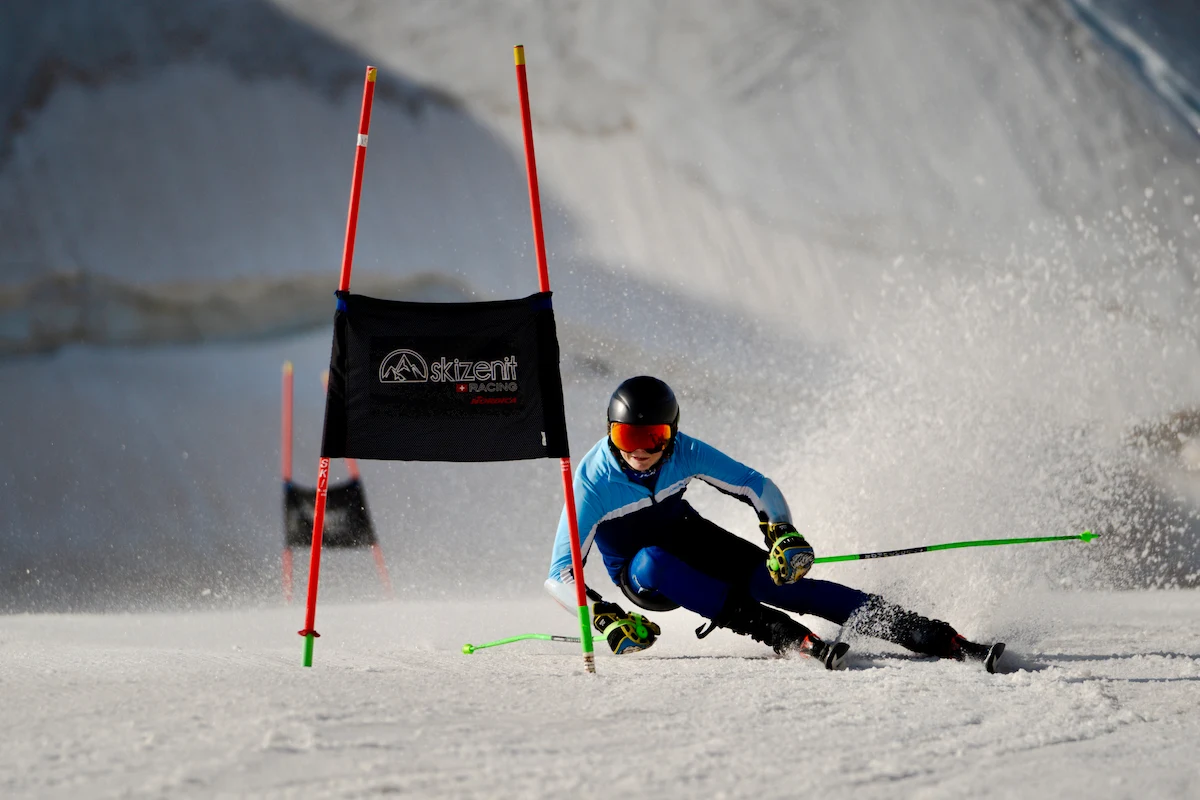
Finding the right time to head to the mountains for race practice depends on your specific goals and the type of snow you need. In Switzerland, the high-altitude glaciers offer a unique opportunity to keep your skis on your feet even when the rest of Europe is enjoying summer heat. For athletes who want to stay ahead of the competition, knowing the specific windows for training is the first step toward a successful season.
Zermatt and Saas-Fee are the primary hubs for this kind of work. These locations provide reliable conditions when lower resorts are closed. You can find lanes for slalom and giant slalom almost every month of the year, but the atmosphere and the texture of the snow change as the months go by.
Working on your skills during the off-season helps you maintain your feel for the snow and ensures that your technique doesn’t get rusty during the long break between winter seasons.
As you plan your travel, you’ll see that the calendar is usually split into summer, autumn, and winter blocks. Each block has its own benefits. Summer sessions focus heavily on technical changes, while autumn sessions often lean toward intensity and pre-race preparation. Choosing the right dates means matching your current needs with the environment the glacier provides at that time.
Content
Best months for summer ski training alps
Summer training usually kicks off in late June or early July. This is a special time in the Swiss Alps because you get to experience two seasons at once. You wake up in a lush, green valley and take the lifts up to a world of white peaks and frozen tracks.
The early morning starts are a hallmark of this period. You’ll likely be on the first lift at 6:30 AM to catch the best snow before the sun warms it up too much.
July and August are popular for summer ski training alps because the weather is generally more stable. You get more clear days, which means more time on the gates.
The snow is often salted by the mountain crews to keep it firm, giving you a surface that mimics the icy conditions you’ll face in midwinter races. This firm base is precisely what you need to test your edges and work on your pressure through the turn.
During these months, the focus is often on fundamental movements. Since there is no immediate pressure from a race the following weekend, you and your coaches can take the time to look at your stance, your pole plant, and your transition.
It is a period for growth and experimentation. You can try new lines or adjustments to your equipment without worrying about your ranking for a few weeks.
| Month | Glacier Condition | Training Focus | Typical Temperature |
|---|---|---|---|
| July | Firm, icy morning snow | Technical fundamentals | 28°F to 40°F (-2°C to 4°C) |
| August | Firm, icy morning snow | Gate drills and consistency | 30°F to 42°F (-1°C to 5°C) |
| September | Fresh snow starts appearing | Transition to race pace | 20°F to 35°F (-6°C to 2°C) |
High altitude ski resorts and their schedules
When looking for high altitude ski resorts that offer year-round access, Zermatt stands out as the only one in Switzerland open 365 days a year, weather permitting. The Matterhorn Glacier Paradise sits at nearly 3,883 meters, making it the highest summer ski area in Europe.
This height is a huge advantage because it keeps the snow frozen even during heatwaves in the valley. You’ll find that the air is thinner here, so your physical conditioning will get a natural boost just by being on the mountain.
Saas-Fee is the other major player, usually opening its glacier for skiing in mid-July. Many professional teams choose Saas-Fee because the glacier is dedicated almost entirely to race training during the summer and autumn.
The slopes are steep enough to provide a real challenge for giant slalom, and the lift system is efficient, allowing for a high volume of laps in a single morning. The town itself is car-free, which creates a quiet, focused environment for athletes to rest and recover after a long day on the ice.
The schedules for these resorts are fairly consistent, but it is always smart to check the local lift company websites for maintenance closures. Usually, the “summer” season runs from July through October, and then the resorts transition into their “winter” operations. During the transition, more terrain opens up, but the glacier remains the heart of the training grounds for competitive skiers.
Autumn Swiss glacier ski training dates
September and October are often considered the prime months for serious racers. This is when the Swiss glacier ski training dates become most crowded with national teams and elite clubs.
The reason is simple: the first World Cup races usually happen in late October, and everyone is looking to find their top speed. The snow starts to feel more like “winter” snow again, as the nights get colder and fresh powder begins to dust the glaciers.
If you choose to train during this window, you’ll be sharing the mountain with some of the best in the world. It’s a great chance to watch how the pros handle their inspections and their warm-ups.
The intensity at the start hut is higher, and the lanes are often set more aggressively to prepare for the upcoming race season. You’ll want to make sure your fitness is at its peak before arriving for an autumn camp, as the combination of high altitude and high-intensity gates can be demanding.
By late October, the training moves from just the glacier to some of the higher traditional runs if the snow allows. This variety is helpful for getting used to different terrain profiles.
You might start your morning on the steep glacier pitches and finish with some technical drills on the flatter sections as you ski back toward the mid-station. It’s a complete workout that builds both strength and agility.
Year-round ski camps for all ages
One of the best things about the Swiss training scene is that it isn’t just for the pros. There are year-round ski camps designed for younger athletes, teenagers, and even adult masters racers.
These programs take the elite training methods used by national teams and make them accessible to anyone who wants to improve. Whether you are looking to shave a few tenths off your local club race time or you aim to qualify for higher-level FIS races, there is a program that fits.
For younger skiers, these camps are about more than just speed. They focus on building a strong athletic foundation. Coaches often incorporate different sports in the afternoons, like mountain biking or hiking, to keep the athletes engaged and build overall coordination.
This holistic approach helps prevent burnout and makes the whole experience more enjoyable. You’ll meet people from all over the world, which adds a great social element to the hard work on the slopes.
Adult masters racers also find a home on the glaciers. It’s never too late to refine your technique. These camps often provide a bit more flexibility, focusing on the specific areas where you want to improve, whether that’s handling steeper terrain or getting more comfortable with high-speed turns. The feedback is direct and uses modern tools like video analysis to show you exactly what needs to change in your body position.
Technical aspects of glacier training
Training on a glacier is different from skiing on a normal mountain in January. The ice is denser, and the weather can change in a heartbeat. You need to be prepared for everything from bright, blinding sun to sudden fog and wind.
This environment teaches you to be adaptable. If you can ski well on the changing surfaces of a glacier in August, you will feel much more confident when you hit a perfectly groomed race hill in the winter.
The use of salt is a big part of the technical side of summer skiing. Mountain crews spread salt on the gates to draw out moisture and create a hard, icy surface. As a racer, you need to know how to tune your skis for this.
Your edges must be sharper than usual, and your wax choice has to account for the friction of the crystals. Part of the experience at these camps is learning about equipment maintenance from experts who know how to make a ski move fast on glacier ice.
Video analysis is another tool you’ll use frequently. After a morning of training, you’ll often sit down with your coach to watch your runs. Seeing yourself on screen helps you connect what you feel in your boots with what is actually happening with your skis.
You might feel like you are leaning forward, but the video shows you are slightly back. These small corrections, made repeatedly over a few weeks, are what lead to major breakthroughs in your performance.
Managing the altitude and physical load
Skiing at 3,500 meters takes a toll on your body. You might notice that you get out of breath more easily or that your muscles take longer to recover. That’s why the structure of these camps is so important.
A typical day starts very early, but it also ends early. You are usually off the mountain by 1:00 PM, giving you the entire afternoon to rest, hydrate, and do some light dryland training.
Hydration is your best friend at high altitude. You need to drink much more water than you would at sea level. Many athletes also find that a nap in the afternoon helps them stay fresh for the next day.
The goal is to maintain a high level of quality in every turn you take. It is much better to do five perfect runs than ten sloppy ones because you are too tired to hold your form. Listen to your body and communicate with your coaches about how you are feeling.
Dryland sessions in the afternoon are usually low-impact. You might go for a light jog, do some stretching, or work on core stability. These sessions help flush the lactic acid out of your legs and keep your joints mobile. The Swiss villages offer great facilities for this, from world-class gyms to beautiful forest trails that are perfect for a recovery walk.
Equipment essentials for glacier camps
When you pack for a glacier trip, you need to think about layers. Even if it’s 80°F in the village, it can be freezing at the top of the lift. You’ll want a good base layer that wicks away sweat, a mid-layer for warmth, and a high-quality shell to protect you from the wind.
Since you’ll be training in gates, a chin guard for your helmet and pole guards are necessary for slalom, while a back protector is a smart choice for all disciplines.
Sun protection is something you can’t ignore. The sun’s rays are much stronger at high altitude, and they reflect off the snow, hitting you from all angles. You need high-SPF sunscreen and quality goggles with lenses designed for bright light. Many racers also carry a spare pair of lenses for when the clouds roll in. Taking care of your eyes and skin ensures that you can focus on your skiing rather than dealing with a painful sunburn or eye strain.
Your ski setup should be checked before you arrive. Make sure your bindings are correctly adjusted and your boots fit well. If you are growing, it’s worth getting your setup looked at by a professional shop in Zermatt or Saas-Fee.
They see hundreds of racers every week and know exactly how to dial in your equipment for the local conditions. Having confidence in your gear allows you to push your limits in the gates.
| Item | Why do you need it | Pro Tip |
|---|---|---|
| Sharp Edges | To grip on glacier ice | Check them every day after skiing |
| High-SPF Sunscreen | Strong UV rays at 3,500m | Don’t forget your lips and ears |
| Multiple Goggle Lenses | Weather changes quickly | Keep a low-light lens in your backpack |
| Hydration Pack | To stay hydrated on the mountain | Drink small amounts frequently |
Planning your trip to Switzerland
Getting to these high-altitude ski resorts is relatively easy, but it takes some planning. Most international travelers fly into Zurich or Geneva. From there, the Swiss rail system is the most efficient way to reach the mountains.
The trains are punctual and offer plenty of space for your ski bags. The journey itself is beautiful, taking you through deep valleys and past turquoise lakes before you start the climb into the high peaks.
Once you arrive in Zermatt or Saas-Fee, you’ll notice they are car-free. You’ll get around by walking or using small electric taxis. This makes the villages very safe and easy to get around, especially for younger athletes.
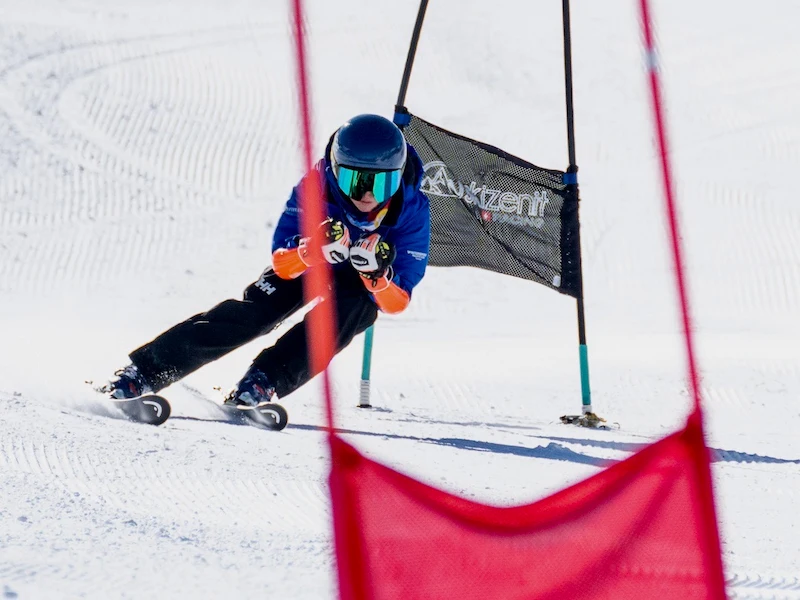
Most of the hotels and apartments are within walking distance of the lift stations, or they offer shuttle services. Staying close to the lifts is a good idea, as those early morning starts come quickly.
For your stay, you can choose between traditional hotels, youth hostels, or self-catering apartments. Apartments are a popular choice for families or groups of athletes because they allow you to cook your own meals and have a bit more space to dry out your gear.
No matter where you stay, you’ll be surrounded by a community of people who live and breathe skiing. The energy in these towns during the training season is contagious and will definitely get you excited for your time on the snow.
Common questions about glacier training
You might be wondering if you are “good enough” for a glacier camp. The truth is that these camps cater to a wide range of abilities. As long as you can safely ski a red run and have a desire to improve, you will find a place.
The coaches are experts at breaking down complex movements into simple steps that you can practice at your own pace. You don’t need to be a future Olympian to benefit from professional coaching and great snow.
Another common question is about the length of the camp. Most people find that 5 to 10 days is the “sweet spot.” This allows you enough time to make technical changes and see progress without getting overly fatigued.
If you stay longer, it’s important to build in rest days when you stay off your skis and let your body recover. Quality over quantity is the mantra of successful glacier training.
Cost is also a factor. Switzerland can be expensive, but there are ways to manage your budget. Booking your lift passes in advance often saves money, and many camps offer “all-inclusive” packages that cover coaching, lift tickets, and sometimes even accommodation.
Think of it as an investment in your skills. The progress you make in one week of focused glacier training can be equivalent to a whole month of casual skiing in the winter.
Taking the step to train on a glacier is a big commitment, but it is one that pays off the moment you start your first race of the winter. You’ll feel more balanced, your timing will be sharper, and you’ll have the confidence that comes from knowing you’ve put in the work while others were away from the slopes. The Swiss Alps provide the perfect backdrop for this journey, combining world-class facilities with some of the most beautiful scenery on earth.
As you look at the calendar and pick your dates, remember that every day spent on the snow is a chance to learn something new. Whether it’s a small adjustment to your hand position or a major change in how you initiate your turns, these moments add up. The coaches and the community in Zermatt and Saas-Fee are there to support you and help you reach your potential as an athlete.
Ready to dominate the slopes? Push your limits with our competitive skiing program. From mastering gate precision to perfecting race strategy, we provide the pro-level training and gear advice you need to stand on the podium. Your fastest season starts here.